Shining Beacons of Light

Shining Beacons of Light

Saturday, May 21, 2011

Christ has died! Christ is Risen! Christ will come again!

It is May 21, 2011 and some people around the world are busy preparing, and perhaps worrying, about the second coming of Christ today. Harold Camping, an evangelical Christian radio broadcaster in California has predicted that today is the day. His means of calculating the date is too complex for me to understand, truth be told. But somehow, his arguments are compelling enough to lead some to quit their jobs, others to go into hiding, and still more to wonder what exactly it is that Christians believe. I was asked a question about it all by a friend (also my former high school orchestra conductor, as it happens). Here is my response, with an extra dose of Anglican theology thrown in, since I am supposed to be on retreat working on my doctoral dissertation.

Obviously there are some Christians who believe strongly in the triumphant return of Christ. The TV is full of them. However, they tend to think the May 21 prediction is nonsense, since Jesus himself says that no one knows the day and hour except the Father in heaven. But they believe it will happen eventually. Even mainline Protestants, who certainly don't emphasize such things, must believe in the second coming in some sense, since our liturgies are full of reference to it. In the Episcopal Church, Eucharistic Prayer A includes the congregational refrain "Christ has died. Christ is risen. Christ will come again." In fact, the liturgical season of Advent is specifically set aside for the preparation of Christ's coming, both as a baby at Christmas and also on the last day.


The earliest Christians, too, believed in the Second Coming. However, they thought it would happen in their lifetimes. St. Paul certainly did. That's why he advised against people marrying unless absolutely necessary. He thought we should focus on preparing ourselves spiritually for Christ.
The gospel writers also thought it would happen sooner rather than later. Mark's gospel, in particular, really has to be read through the lens of one who thought that the second coming would be soon. There's lots of evidence for this. His gospel--the earliest--was written in AD 70, around the time of the destruction of the mighty Temple in Jerusalem. It was for Mark a sign of the approaching end times. Throughout his gospel, he uses the word 'immediately' often, emphasizing that there isn't much time to get his message out, or to be prepared. Thus, Mark avoids stories about Jesus' origins, such as the virgin birth, since for him that's so much less important than the future--he just wants to get to the substance of his gospel, sharing the Good News of the saving work of God in Christ. Finally and perhaps most interestingly, in Mark's original ending, there is no resurrection appearance, since he seems to believe that the resurrected Jesus will appear not on Easter morning, but on the last day when he comes again. He concludes his gospel by saying that the women who came to the tomb left terrified. Obviously, that didn't happen--or at least it hasn't yet.

The later gospels (Matthew and Luke use Mark as a model, but were written 10 to 20 years later) deal with the fact that Jesus hadn't come again as soon as expected by the Christians of Mark's era by telling us about Jesus' resurrection in more pictorial ways. Luke grapples with the fact that Jesus is not still physically on earth by describing his ascension into heaven. They write about the establishment of the church community and Luke describes the gift of the Holy Spirit on Pentecost, all to tide us over for the longer term until Jesus comes again. Even so, I don't think these later evangelists would have imagined we'd still be here 2,000 years later.


The toughest question is: what did Jesus himself think? Of that we can't really know, since each of the gospels is written from a post-resurrection, post-Temple destruction perspective. So, as a result, much of what we read, much of what Jesus says, is the gospel writers' attempts to craft a compelling story, rich with theological meaning, inspired by the events happening around them and most especially by their profound belief and conviction that Jesus is the Son of God who died on the cross and rose victoriously on Easter. It doesn't mean that what they write isn't true in a deep theological sense, even as it probably is isn't always historical fact. They believed this Gospel, this Good News, with every fiber of their being, and because they were confident that Jesus was the Son of God, they were also sure that he would come again, at some undetermined time.

However, what that means is that it is sometimes hard to discern what Jesus thought about such issues, or even *if* he thought about such issues. Presumably he did to some degree as it was a common first century concern, but we can't know for sure. Sometimes what Jesus says is really what the gospel writers say, inspired by their belief in Jesus as the Son of God. But sometimes it really is Jesus, too. Unfortunately, it can just be hard to figure out which is which.

Whatever is depicted in the gospels, I think that if and when Jesus comes again, it will not be a cataclysmic event for the world--with stars falling from the heavens and earthquakes and the like. Instead, I think it will be a reconciling event. Because I believe that Jesus came to bring peace, hope, and new, abundant life. There may well be judgment--either at the end of our lives or on the day of the second coming (whatever that may mean)--but in my imagination, anyway, we will do the judging of ourselves when we see from a new perspective the pain and hurt we have caused others. As we know, there's nothing more damning in the human experience that knowing how deeply we have hurt others. F. D. Maurice, the great nineteenth century Anglican theologian and my hero,
described sin as “the sense of solitude, isolation, distinct responsibility.” He writes that one knows sin most fully when he realizes “how he has broken the silken chords that bind us to our fellows; how he has made himself alone, by not confessing that he was a brother, a son, a citizen."

But then, just as we grapple with that, we also have the opportunity to receive God's limitless grace, forgiveness, and love. Just because that's who God is and what God does. God doesn't force us to accept this love, of course. We can wallow in our guilt and pain and self-destructive ways if we want, but God certainly hopes we will choose the more life-giving path that is being offered us, and will wait on us for long as long as it takes. God will always be there holding out hands in love, waiting for us to drop whatever junk we may be carrying (guilt, pain, selfishness, whatever) so that we can reach back and be raised to new life.

All that said, I do think we should be ready for Christ's return, because it just might happen. We don't know when or how. But I believe that readiness doesn't come through doomsday predictions, but through loving and forgiving others, helping the poor, sick, and oppressed, living fully and abundantly, just as Jesus wanted us to do. If we do all that, then we'll be ready to meet Jesus, whether he descends on a cloud, or meets us around the next corner in the face of a homeless man, the cashier at the grocery store, or those we already know and love.

None of this is a definitive answer, of course, but it's what I think. Maybe I'll be dreadfully wrong. But if I am, I'd rather be held accountable for being too loving and too forgiving than not loving enough.


F. D. Maurice (who plays a starring role in my dissertation) wrote the following in his controversial book
The Theological Essays in 1852. I think it is just about the best assessment of what we should believe and hope for, both now and in the age to come:

"If you take away from me the belief that God is always righteous, always maintaining a fight with evil, always seeking to bring His creatures out of it, you take everything from me, all hope now, all hope in the world to come. Atonement, Redemption, Satisfaction, Regeneration, become mere words to which there is no counterpart in reality.

"I ask no one to pronounce, for I dare not pronounce myself, what are the possibilities of resistance in a human will to the loving will of God. There are times when they seem to me—thinking more of myself than others—almost infinite. But I know that there is always something which must be infinite. I am obliged to believe in an abyss of love which is greater than the abyss of death. I dare not lose faith in that love. I sink into death, eternal death, if I do. I must feel that this love is compassing the universe. More about it I cannot know. But God knows. I leave myself and all to Him."

Enjoy your May 21, whatever happens at 6 pm. Jesus wants us to appreciate and embrace the gift of life. He wants us to abide in that abyss of love.

© The Rev. Matthew P. Cadwell

Sunday, May 1, 2011

On Anne Frank, Resurrection, & Baptism: A Sermon for the Second Sunday of Easter


Today in Wakefield we celebrated the Second Sunday of Easter with two baptisms. This was the homily.

Most of you know that I like movies, and I like to talk about movies in my sermons. Usually, I talk about science fiction movies like Star Wars or Star Trek, because they played such a major role in my life as a kid--the vast, vast majority of my toys were Star Wars action figures, so those movies and its characters like Luke Sykwalker, Han Solo, Princess Leia, and Darth Vader, were my constant companions--I think I often even brought action figures to school in my backpack to play with at recess, and also just to have my heroes with me. I also liked the Wizard of Oz and quite a few musicals-- my parents liked them, too. So it might come as a surprise that it's not only fantasy or cheesy musicals that draw my attention. I also like serious movies that make me think. Movies that draw me in, identifying with the characters, sharing in their story.

When I was 12 or 13 years old I happened to see the old 1950s movie The Diary of Anne Frank. I don’t think I knew of her story before I saw that movie; although, I did know of the Holocaust, but perhaps without the personal face that Anne Frank gives us so movingly. My parents recorded it on TV and I was so drawn in that I watched it over and over again (I am one of those people who likes to watch movies many, many times, so I can catch all the nuances). Sometimes I wonder if that was such a good idea, when it came to Anne Frank, as it really scared me on the one hand, but it was also so compelling. Certainly it shaped how I look on the world.

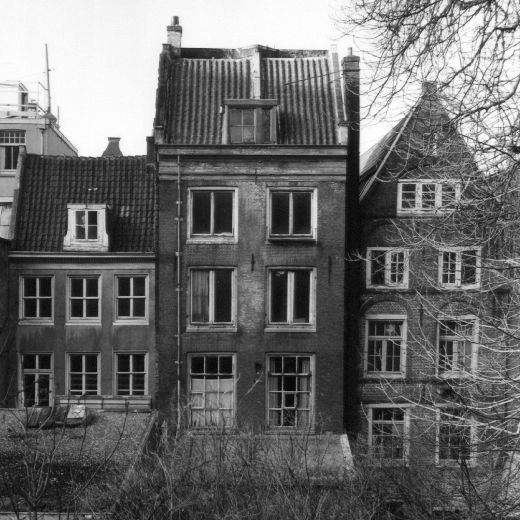
You probably know the story—from reading the actual diary or seeing a production of the play or the movie. (As it happens, if you don’t know it, or if you want to see it again in the near future, our own parishioner Chip Sheeran is directing a production of the Diary of Anne Frank at the Amazing Things Arts Center in Framingham, opening this Friday. And, our super talented parishioner Emily Sheeran stars as Anne.) You may know that Anne and her family were Germans, from Frankfurt, but right after Hitler came to power they moved to the Netherlands, when Anne was 4, where they thought they would find a safe refuge. And for about 8 or 9 years they did—living comfortable middle-class lives, until 1940 when German troops rolled in and occupied that country, too. So they went into hiding in the secret apartment above Anne’s father’s office in a factory that made pectin and spices used in making homemade jams.

What’s interesting, from a dramatic, literary, and even human perspective, is how the story is really limited to what happens in the secret annex. They obviously hear about what’s going on outside, from the radio and the few helpers who bring them food and other provisions, but those in hiding never see that world, except when they take a peek through the heavy lace curtains or blackout paper that cover their windows. The adults try hard to give the younger residents as normal a life as they can—assigning books to read, math homework, and the like. But, of course, their lives are far from normal. The fear of being found out is never far away. A telephone call at an odd time, an unexpected knock on the door, or footsteps on the stairs on a Sunday fill them with terror. I can’t even imagine the strength of character and courage it must have taken them to live that way for 2 whole years, every day worrying that they might be discovered.

I read once someplace that when the authorities finally did find Anne and her family and marched them out to a Dutch prison camp, before sending them off to even worse places on the last train to leave the Netherlands, Anne—who was always so hopeful—actually expressed a sense of relief at being found. Not, of course, for the fate that would come, but a sense of relief for being freed from worrying about every knock or footstep, and relieve to be able to experience the pleasure of feeling the sunshine again and breathing fresh air. As you probably know, only Anne’s father survived the war. Anne and her sister Margot died of typhus in the Bergen-Belsen concentration camp, sadly, just a couple weeks before the British liberated the camp. Afterward, her father devoted his life to telling the story of Anne, her family, and fellow residents of the secret annex, giving us faces and lives that we can relate to on a deeper human level while we learn about the horrors of World War II and the hope and power of the human spirit.

So, what does this have to do with Second Sunday of Easter and our baptisms this morning? Well, when I first read this morning’s gospel, I imagined that the disciples who were locked away on that first Easter felt a lot like Anne Frank and her family. They were terrified. They were afraid of any knock or footstep outside, worried that like the SS 2,000 years later, the Roman soldiers would find them and crucify them, just like they had Jesus. After all, that’s why they scattered; that’s why Peter denied Jesus; that’s why the disciples weren’t there at the foot of the cross. The women were there, but the men fled. They were too afraid—not only for Jesus, but also, really, for themselves. And probably, their fears were justified. Because the authorities ruled by fear. Like the Nazis, the Roman rulers were not hesitant to use the sword, or the cross, to accomplish their goals.

Now, our gospel reading says that the disciples were locked away for fear of the Jews. That’s very misleading. Jesus was Jewish. The disciples were Jewish. Absolutely everyone they knew—Mary, Martha, Lazarus, Mary Magdalene, Mary Jesus’ mother, Joseph, absolutely everyone—was Jewish. Maybe the disciples were afraid of the Jewish religious authorities whom Jesus had upset, but then, they didn’t really have the power to do anything. So more likely, the disciples were locked away afraid of the Roman government. Because, you see, Pontius Pilate, the Roman governor of the area around Jerusalem, was a ruthless man. In fact, Caesar later removed him from office for being so over the top in terrorizing the people under his authority. The gospels sort of portray Pilate as being reluctantly caught up in the situation with Jesus, but that seems less likely as we learn more about who Pilate was. He wouldn’t have given the crucifixion of Jesus (or anyone) a second thought, if it would have kept the peace and kept him in power without news of a disruption traveling to Caesar in Rome. The problem is that by the time the gospels were written, especially John’s gospel, the church leaders knew that Rome had the upper hand, and they wanted to secure as much protection as they could from the government. They couldn’t portray Rome as the bad guys, so they shifted the blame for everything on not just the Jewish leaders but on the Jewish people. Unfortunately, we Christians have been dealing with the fallout of that shift ever since. Sadly, tragically, it’s part of what gave rise to Jewish persecution throughout history, including in Europe during World War II, including families like Anne Frank’s.

But you know what, in today’s gospel, as the disciples are cowering in fear, afraid for their lives, hope breaks in. Because Jesus breaks in. He literally breaks in, in fact, showing up in their locked room, saying “Peace be with you.” Peace. Do not be afraid. He tells them, in fact he shows them, that they have no reason to fear, because God is in charge—not the religious leaders, not the soldiers or Pontius Pilate or not even Caesar. But God. Jesus appears to them that Easter evening so that they will know that their life and the life of the world is really, truly, in God’s hands, despite how it may seem sometimes. Easter is God’s way of telling us that there’s nothing that the world can dole out, however fearful, however horrific, that God can’t transform into something better. It doesn’t erase what happened earlier, it doesn’t make it go away—the wounds of Jesus’ crucifixion are still there, after all—but God takes it and is able in some mysterious way to bring new life.

And it’s that new life, that promise that we celebrate today as we baptize Kate and Madison. By baptizing them, what we are really doing is telling them that their lives are, in fact, in God’s hands, and that they are marked with the cross as Christ’s own forever. There’s nothing that the world can do to change that. They will forever and always belong to God. And time and again, God will work through Kate and Madison to bring wonderful new life to the world. That’s God’s promise for them, for us, for the whole world. It’s a promise that we saw fulfilled that first Easter 2,000 years ago when Jesus appeared to the disciples in their locked room, and it’s a promise fulfilled each and every time new life conquers fear, death, and despair.

Before I close, I want to go back to Anne Frank for a moment. I know it probably seems like a weird thing to talk about Easter and a Jewish girl who died in World War II in the same sermon. And sometimes, we may wonder how it is that these promises of new life are actually lived out when we see so much destruction around us, not only a generation ago, but today as we hear the news of Libya and Afghanistan and Iraq, the earthquakes and nuclear disaster, and even this week’s tornadoes in the south. But I believe, because I believe in Easter, that somehow, in some way, God really is working to bring experiences of the resurrection and new life into our lives and our world. Most especially I believe that God is doing that work of resurrection through us.

And consider this: Anne Frank, the girl who lived in hiding and simply wrote a diary has touched the lives of millions of people in the 60 years since it was first published. In fact, next to the Bible, her diary is the most translated and most widely read book in the world. By Jewish people, of course, but also Christians, and Buddhists, Muslims, Hindus, and people of no religion at all. Eleanor Roosevelt described it as “one of the wisest and most moving commentaries on war and its impact on human beings that [she had] ever read.” John F. Kennedy said, “Of all the multitudes who throughout history have spoken for human dignity in times of great suffering and loss, no voice is more compelling than that of Anne Frank.” And so it is that through her, and people like her barriers between people—whether because of religion or culture, or anything else—are broken down. Through her story we see the human spirit soar and transcend the terrors of the world. In her story, we find God’s promise of new, abundant life.

And you know what, it’s a promise shared by the whole human family, regardless of our religions or cultures. It’s a promise that we will make when we baptize Kate and Madison today, and it’s a promise that we receive each and every time we see signs of new life, of resurrection, of Easter in our world.

Jesus came and stood among them and said, "Peace be with you."

May that peace, joy, and new life fill our hearts, today and always.

To God be the glory: Father, Son, and Holy Spirit. Amen.

© The Rev. Matthew P. Cadwell

Sunday, April 24, 2011

Finding Resurrection in the Easter Garden: A Sermon for Easter Day


In the name of our Risen Lord, Jesus the Christ. Amen.

I want to begin by saying yet again that it really is a pleasure and a delight to see the church so full this morning—so full of people, so full of flowers, so full of fancy outfits, so full of abundant, vibrant, new life. You know what, it feels a lot like Easter in here. Just like it should.

Easter really is a wonderful day—devoted to the celebration of new life—and it’s especially wonderful and welcome this year, coming as it does after our long, seemingly endless winter. You know that unlike Christmas or the Fourth of July, Easter is not always on the same date, nor is it just that it falls on the first Sunday in April or whatever. The day is actually determined by a rather complicated computation, decided by a group of bishops all the way back in the year 325: it’s the first Sunday, after the first full moon, after the vernal equinox. And, it can’t fall before March 21 or after April 25. So this year, being April 24, Easter is just about as late as it possibly can be. And it is nice, for a change, to be able to celebrate it without winter coats or the fear of an inopportune “resurrection” blizzard, with long awaited flowers beginning to rise from the ground, and the promise of another beautiful spring not long off.

I remember three years ago, when I was still living in Canada, in Toronto, Easter fell just about as early as it can in March, and we still had lots and lots of snow on the ground. It was an endlessly long winter, not unlike this last one. I had accepted Emmanuel’s call to be your rector a few days before—the Tuesday of Holy Week, I think. But I wasn’t here yet. You and I both had to wait a while, for the school year to finish and for me to move back to the U.S., and in fact for the congregation to vote to accept me. So I was celebrating what I figured would be my last Easter in Canada. And what I remember most especially about it was that my parish up there—Christ Church Deer Park—had this especially unique tradition: planting “an Easter garden” outside on the church grounds on Holy Saturday, right after the Easter Vigil.

The idea of the Easter garden was that when people came on Easter morning, or just passed by (the church is on the busiest street in Canada), they would see this wild and unexpected burst of flowers and new life, that seemingly grew up over night. Sounds really nice, right? Only, remember, it was winter still and there was lots and lots of snow, so it wasn’t real flowers that we planted, but these crazy tall plastic flowers--tulips and daffodils and daisies--made out of plastic cups and plates, of all things. They were totally fanciful, all red, blue, purple, and yellow. And, here’s the really wacky part (as if the plastic flowers weren’t wacky enough), since there was no unfrozen ground to be found, we planted the flowers in the snow banks. So, you can picture it, there we were, children and adults all together, after the Easter Vigil running around on a cold, dark wintry night, planting plastic flowers in four or five foot snow drifts, and then, for good measure, writing Easter messages, and drawing Easter eggs and bunnies on the sidewalks in pastel colored chalk.

I’ll always remember that night, because when I went to the parking lot to plant some purple flowers in a particularly massive snow bank, I discovered that my car had been hit—the tail lights were all smashed and the rear bumper was just sort of hanging on for dear life. Luckily, the woman who hit it, a parishioner as it happens, was standing there, trying to figure out what to do. You know, there’s nothing like a smashed car to dampen your Easter mood—both hers and mine. Thankfully, I was able to drive it home, but I took the bus to church the next day, since I was afraid the car wouldn’t make it in one piece.

And I have to confess, I was in an especially bad mood that morning—here it was Easter Day, I had a smashed up car, and I was waiting outside in the dark and cold for the bus at 6:00 in the morning. Not very Eastery. But eventually the bus came, and as it approached the church, I looked out the window, and what did I see? Three and four foot high mounds of snow, sprouting bright red, blue, purple, and yellow flowers. It was a sight so silly, and also delightful. Ridiculous and hopeful. Most especially, it was a sign of new, joyful life right there on a cold wintry morning. Even in my grumpy, not very Easter-like mood, I couldn’t help but be cheered and uplifted. The resurrection hit me just when I least expected it.

And I think that’s often the way the resurrection hits us, just when we least expect it. Certainly that was true of those who first discovered the empty tomb—Peter, John, and Mary Magdalene. Of course, when Mary Magdalene went to the garden on that first Easter morning, she didn’t see plastic flowers sprouting up from snow banks, and she wasn’t lamenting a smashed car or having to wait for a bus. Her grief was far more real, far more painful, beyond words. The pain of Jesus’ death cut through her heart like the soldier’s spear that had pieced Jesus side. And now, it was made all the worse by his missing body. She cried, “They have taken away my Lord, and I do not know where they have laid him.” Who would do such a horrible thing? Who would steal a body? It’s the kind of thing you might see investigated on 60 Minutes or Dateline NBC. But, of course, Jesus wasn’t really stolen. He was alive. He was transformed. He was right there, with her still.

But we read that Mary didn’t recognize Jesus at first. She thought he was the gardener. Maybe she just couldn’t see well from the tears in her eyes, or perhaps from lack of sleep after the horrific events of the days before—replaying the image of Jesus nailed to the cross over and over again. It would be hard any of us to sleep after watching helplessly as that horror happens to someone you love so much. But then again, maybe, that wasn’t it. Maybe, it wasn’t because of her grief that she didn’t recognize Jesus. Maybe, I would even say probably, it’s because Jesus had changed. Maybe, probably, in his new, resurrected state he was beyond recognition, comprehension, and certainly beyond explanation.

Whatever the resurrection was, whatever God did to bring Jesus back to life, he was transformed that morning. In their various ways all four of the gospels tell us that the Jesus that Mary and the disciples encountered on that first Easter morning was somehow different from the Jesus they knew before Good Friday.

Now, the gospels really aren’t very good at describing this change. And I suspect that’s because whatever happened in the garden on that Easter morning is far beyond anything that can be put into words or images. It’s something that can be witnessed, experienced even, but not described. Certainly it’s not enough to simply say that Jesus just woke up on the third day. That would be hard to believe, of course—especially for those who were there on Good Friday and saw his life and soul torn from his body—but we could probably, sort of, understand it; we might even be able to describe it. But Easter is more than that. It’s more profound, more meaningful, more transformative than that. For 2,000 years people have been trying to make sense of it, and for 2,000 years we have always come up short.

Some of you know how much I like to talk about Star Wars, especially it seems on days like Christmas and Easter. I don’t want to disappoint you today, so I’ll add that what happened on that first Easter morning is beyond even what the best science fiction writers like George Lucas or Gene Roddenberry could dream up. It was more amazing than anything we might read about in Harry Potter novels, or see on TV on Dr. Who or Merlin. And that’s because it’s so fantastic, it’s so amazing, so transformative, that only God could dream it up. And certainly only God could make it happen. Because only God can take death and transform it into life. Only God can take grief and transform it into joy. Only God can take fear and transform it into hope.

And as transformative as Easter was for Jesus, as amazing to behold as it was Mary Magdalene and Peter and the other disciples, it can be just as amazing and just as transformative for us. If Jesus’ resurrection in that beautiful Easter garden 2000 years ago is to have any meaning for us now, if the light of that first Easter Day so long ago is to shine as brightly today as it did then, we have to live it, too. We have to be transformed by it. We have to know and believe and trust that new life, abundant life, resurrection life, is as much a possibility for us here, today, as it was for Jesus, and for Mary Magdalene, and for Peter so very long ago.

Easter teaches us to believe in things that seem impossible. It tells us that what we see is not all that there is. It holds before us the hope of new life, abundant life, spring life, where before all we could see was winter, fear, and death. Most especially, and most importantly, the transformation of Easter encourages us, in fact it compels us, to roll the stone away and step out of the tombs of our lives, so that we can embrace new possibilities. So that we can be filled with hope. So that we can live the resurrection.

And you know what? We can start living that fantastic, amazing, dazzlingly bright Easter life right now. We don’t have to wait for some future time. We don’t need soldiers or angels to roll the stones away for us. We can do it ourselves, today, right here, right now. We can step, run, or even leap, out of the tombs of our lives, and we can live: freely, fully, abundantly. We can even plant crazy plastic flowers in snow banks if we want to. Because that’s God’s hope for us. That’s God’s dream for us. That’s God’s promise for us. Jesus was raised, so that we, too, will be raised.

Mary Magdalene went and announced to the disciples, “I have seen the Lord.” May we, with Mary, with the disciples, also see the Lord alive, then, may we live the life of resurrection ourselves, today, tomorrow, and always.

Happy Easter, my friends. Happy Easter. Alleluia! Christ is risen.

© The Rev. Matthew P. Cadwell

Friday, April 22, 2011

It is Finished: A Sermon on Good Friday


In the name of God: Father, Son, and Holy Spirit. Amen.

About 10 years ago, I took an unlikely job as the Youth Minister at Church of the Good Shepherd in Acton. I call it an “unlikely” job, because I had never really done anything in youth ministry before then and in fact I didn’t even like my own church’s youth ministry program when I was growing up. So the whole thing was really quite a stretch for me. But it was a good opportunity to develop some skills that were “dormant,” to say the least.

While much of my ministry there was exclusively youth related, I did have the occasional opportunity to branch out some, including preaching and serving at the altar. One of the opportunities to preach was at the town’s ecumenical Good Friday service—one of those infamous three-hour services focused on the “seven last words” of Jesus. Of course there are not really just seven words, but more like seven phrases, that the gospels tell us Jesus spoke from the cross. As much as I find our Anglican liturgy for Good Friday rich with meaning, I always liked that ecumenical service for the opportunity to hear the differing voices and perspectives of the various religious traditions in town.

For me, the most stirring of these last words have always been Jesus’ very last words: “It is finished.” I’ve often wondered, what did Jesus mean? Was he feeling complacent, or defeated? Did he mean that his life was finished? That his work was finished? Or something else?

As I’ve pondered these words this week, as I have thought about Jesus’ life and ministry, I think that what he must have meant is that he’s done what he can do. And that’s enough. The rest is up to God, and maybe even up to us. Jesus has loved as fully and freely as he could; he has taught what he could teach; he has healed those who were ill; he has opened his arms as wide as possible, even to the point of being nailed on the cross. He has done what he lived to do.

The question is, how will people respond? How will we respond?

Because, as we know, Jesus never forces anyone to believe in him. He never coerces us to accept his love. He doesn’t just heal people who have no desire for it. For good or ill, it is always up to us. It is up to us to say yes to Jesus’ love. It is up to us to accept the grace and the hope and the freedom he offers us. It is up to us to continue the work that Jesus devoted himself to—loving, healing, teaching, living for God.

You know, I can’t believe that Jesus lived the way he did—so openly, so passionately, so fully— that his life, his work, his very being would die up there, nailed to that cross 2,000 years ago. Instead, I believe that he knew that if his life were to have meaning, if everything that he lived for were to really take root and grow—it would have to be through his friends, through his disciples, through us. And so, it’s not enough for us to gaze up at him on the cross, his body broken, his life torn away—a horrific and jarring sight.

We are not meant to glory in Jesus’ death, nor even, I think, be appalled by it—though appalling it certainly is. We are meant to be transformed by it, taking up our own crosses each day and living in the way that Jesus lived. Loving in the way Jesus loved. Healing in the way Jesus healed. When he said from the cross, “It is finished,” he passed his ministry on to us. He had done everything he could do, as a man, and as the Son of God.

And he knew that we, together, his community, his kingdom, his body, could do even more. If only we are brave enough, if only we are daring enough to respond. Together, inspired by him, empowered by him, blessed by him, we, too, have the power to heal and teach and love, just as openly, just as fully, just as profoundly. When Jesus looked down from the cross on the world he loved, on the people he loved, he knew that he couldn’t do any more. But he also knew that his life couldn’t end there. He knew that it couldn’t and that it wouldn’t, because the seeds of his life, the seeds of new life, were planted in his friends, in us.

It is finished, Jesus said. And yet, through God, and through us, his work, his life, his love, live on and on and on.

Let us pray,

Lord Christ, who entered into your triumph by the hard and lonely way of the cross: May your courage and steadfast loyalty, your unswerving devotion to the Father’s will, inspire and strengthen us to tread firmly and with joy the road which love bids us take, even if it leads through suffering, misunderstanding, and darkness. We ask it for your sake, who for the joy that was set before you endured the cross, despising the shame, O Lord our strength and our Redeemer. Amen.

Monday, April 18, 2011

For Holy Week: A Reflection on Power

In his Palm Sunday sermon, the Vicar of Wakefield shared a poem by the Rev. Judith Mattison, a retired ELCA pastor in Minnesota, who for a semester in 1993 was Acting Chaplain at Gustavus Adolphus College, when the Vicar was an undergraduate student there. Pastor Mattison was previously pastor at Mount Olivet Lutheran Church, where he was baptized, as it happens. Her poem is a perfect reflection on Pilate's question to Jesus: "Are you the King of the Jews?," as well as on our attempts to control our lives.

POWER

We try to control life
with well-constructed plans
investments
weather reports
and appeals to God
when all else fails.
Pilate thought he had power, too.
Pilate and we are wrong.
We have the only power
which God allows--
and freedom to respond,
but not to direct God,
the privilege of enjoying life
but not of numbering our days.
Pilate and the others--we--
crucified Jesus
a power play,
doomed to fail
so that we might live.

from

Walking the Way
Fortress Press 1986
(c) Judith Mattison

Sunday, April 10, 2011

Going to Bethany and Finding Resurrection


A Sermon for the Fifth Sunday in Lent

Do you have a special place that you go to for peace and quiet? A place for refreshment and renewal? Maybe a room in your home or a park? Is there a place that has special meaning to you? Maybe even right here at Emmanuel.

For me, there are several special places, hallowed ground as it were. One is my college campus in Minnesota. The chapel there has a unique beauty and on the grounds there’s a fantastic view of Minnesota River Valley that can take your breath away. When I go back there I usually drag someone along, like my brother Josh, who often is not as taken with the view as I am, especially when it’s 20 below zero and the wind is whipping across the hill (since I’m usually only there in December), but nonetheless, to me it is very special. I’d even say that I feel God there.

Another favorite place for me is the Bethany Convent of the Sisters of St Anne in Arlington. The Sisters are Episcopalian nuns. You might not have known that we have Episcopal nuns, but we do. Here in Massachusetts there’s the Sisters of St Margaret who have active ministries in Boston, Duxbury, and in Haiti. And the Sisters of St. Anne. They have a quieter ministry. Today there’s just 5 of them at the house in Arlington—three from the Philippines, one born in New York, and one from the Bahamas, but in the past they have had ministries in downtown Boston and Cambridge, in England and in China, New Zealand, the Philippines, in New York and Chicago. The Sisters are just about the kindest, most thoughtful people you could meet.

I went there to the Bethany Convent in Arlington for Mass most Wednesday mornings when I was in seminary. It was a bit of an undertaking, since the service was first thing in the morning and one had to fight Cambridge traffic to get there. I didn’t have a car, so I was always dependent on a fellow student, usually my friend Patti, or sometimes, I even went with a professor—Lloyd Patterson—who would drive in from Belmont, pick me up at the seminary in Harvard Square, and then take us to the Convent. He had to be there by 7:30 to lead the service, so we set off from the seminary at 6:45 or so. It was always something of a crazy ride, because Lloyd had rather slow reflexes and sometimes drove awfully close to the cars in front of us. We did always made it in one piece, amazingly enough, but not without a scare or two. As harrowing as the ride was, though, once you step foot in the chapel, none of that mattered anymore because it was like stepping on sacred, holy ground. The convent chapel and the gardens feel like they are literally infused with a century of prayer, with a century of hospitality, with a century of love.

After Mass, whoever was there was invited to join the Sisters for breakfast in their refectory. The menu was always the same—coffee, juice, cereal, toast, and Sister Gloria's soft-boiled egg. I never had the egg—I don’t like them much—which disappointed the Sisters. I usually had cereal, and maybe toast with their delicious ginger preserves. If you are preparing to be a priest, it’s hard to imagine a more special way of beginning your day: a Eucharist in a gorgeous chapel, followed by breakfast with your favorite professor, a friend or two, and 5 to 7 of the most delightful nuns you could imagine.

One of my favorite memories of the Sisters was the time that they asked me to drive them out to Springfield for Patti’s ordination. I stayed overnight at the Convent—they were quite worried that I wouldn’t wake up on time, since I don’t tend to follow their rigorous monastic schedule, so they wanted me close by for good measure. They made sure I was comfortable for the night with a healthy supply of cookies. And then after breakfast we all piled into their large van and sped on toward the ordination. It’s quite the image, isn’t it? A 26 year old me driving a van full of nuns along the Mass Pike. The Sisters still talk about that day, and it makes me smile every time I think of it.

Unfortunately, I haven’t gotten there to the Bethany Convent too much in the past few years. Arlington is kind of a pain to get to from Quincy, truth be told, and even a little bit from Wakefield. But it’s comforting, and even inspiring, to know that it’s there, that the Sisters are welcoming others, and sharing the love of God with all who come in their doors. Well, yesterday, I returned to this special place with the vestry for our Lenten retreat. There was another group there, so we didn’t have use of the chapel. But it was a fantastic sunny day and we were able to spend lots of time outside—writing letters to God, as it happens. I won’t share what I wrote, but what I will say is that I discovered as I sat out there on a hundred year old bench how the stresses of my life seemed to fall away as I breathed in the fresh spring air, and also how much I had missed this special place—the Bethany Convent.

As it happens, the Convent in Arlington is named after the village of Bethany, featured in this morning’s gospel. That Bethany, the original Bethany, was located just outside Jerusalem and was the home of other sisters—not nuns, so far as we know, but Martha and Mary, and their brother Lazarus. Like the Convent for me (and for many others), it would seem that the original Bethany was also a special place of respite, for Jesus. He went there for rest, refreshment, and renewal. To spend time with friends, where he wasn’t so much the amazing preacher, teacher, healer, savior of the world, but a friend, someone who was loved and cherished, just because.

In this morning’s gospel reading, however, we learn that Lazarus, Jesus’ dear friend, has taken ill. Desperate for help, Lazarus’ sisters sent for Jesus in the hopes that he could arrive in time, to help somehow. But he didn’t make it. Not even close. According to the gospel account, Lazarus had been dead for four days by the time Jesus got around to getting there. It’s sort of a weird story, because on the one hand Jesus seems to know that Lazarus has died and so takes his sweet time getting to Bethany, to make a point. But then when he finally gets there, he’s upset by the whole thing. In fact, John writes that Jesus wept, he was so distraught over his friend’s death. We don’t usually think of Jesus getting all emotional like that--like us--but in this case anyway, he did. While we don’t know any of the details of their relationship, Jesus must have loved Lazarus very much.

And, it would seem, he was so overcome by his own emotion and that of his friends Martha and Mary, that he summoned up the power in himself to bring Lazarus back to life. It’s kind of a funny thing, since we don’t read that Jesus raised everyone who had ever died. He probably didn’t raise his grandparents or aunts and uncles or the friends he had known in his village. While there are other accounts of Jesus raising people in various places, he certainly didn’t do it willy-nilly. But somehow, it would seem, Jesus couldn’t stand the thought of life without his friend, and so he literally broke the rules of life and death, at least for a time, and he gave Lazarus a second chance.

Unfortunately, we don’t know what happened to Lazarus after that. We don’t know if he just resumed life as it had been or if he was changed somehow through this amazing experience. We don’t know if he lived in a different kind of way or altered his priorities. We don’t even know how long he lived in this round two of life. But presumably, it wasn’t forever. Presumably, he’s not still here somewhere—a 2,000 plus year old man, walking around. In all likelihood he died again. Maybe the next week or next year, or maybe 20 years later. But eventually.

So, the gift of new life to Lazarus was a temporary thing, if you think about it in terms of his physical body. And that’s what we usually think of as the miracle in this story. But, I wonder if there’s more to it than just that. Because if the story is just about a guy who was brought back to life 2,000 years ago and then died again, it doesn’t really have a lot of relevance for us now.

But what if the gift of new life was something deeper and more profound than just his physical body getting up and walking around again? What if this gospel story, if you dig deeply enough, is not so much about Lazarus, but instead about how we are all called to step outside the tombs we lock ourselves in. What if this story is really about how we are each given the opportunity to embrace life and live fully, freely and wholly, filled with the love and spirit of God, if only we dare? What if it’s about embracing the call to resurrection even now, even today, even in Lent?

I began by sharing some of my experience at the Bethany Convent—a decade ago when I was a student, and again just yesterday. And as I reflected on the gift of being there in the sunshine yesterday, surrounded by vestry members and the wonderful Sisters of St Anne, statues of Jesus, Mary, and Angels, holy sacred buildings, squirrels, birds and purple flowers, I realized how often I fail to go to Bethany—and by that I don’t mean just the Convent (though I should go there more often for my own spiritual well-being)—but to a place of refreshment and renewal where ever that might be—the place that helps me to grasp and hold onto the abundant, resurrection, new life that Jesus wants for me, and of course, that he wants for all of us.

It’s so easy, in our busy lives, to get distracted, to fill our days with stuff—some of it important, but a lot of it probably not so important—such that we don’t have any room or time left for the really meaningful aspects of life—like love, caring, openness, peace, God. And the sad thing is, when we do that, when we let our lives get cluttered with stuff, we find ourselves ending up a lot of the time like Lazarus, dead and locked away in his tomb.

But it doesn’t have to be that way. In fact, God doesn’t want it to be that way. God wants us to live, fully abundantly, openly—not only in the last day at the end of time, but today, and tomorrow, and always. God wants us to take time out, to go Bethany, where ever that may be, to the special places of our lives that give us peace, hope, and strength, so that we can live, so that we can be who we were meant to be from the first day of creation.

I thought I would close with a quotation by Sister Olga, one of our hosts at the vestry retreat yesterday. In a book celebrating the 100th anniversary of the Order of St Anne, she writes:

“In this twenty-first century world of shadows and fears, of hesitation to follow a dream, some things are luminously clear: a call from God, who knows each of us is whom he calls, and whose enthusiasm for what we are and what we can become is surely his greatest joy and hope.”

In our gospel reading Jesus said, "I am the resurrection and the life. Those who believe in me, even though they die, will live, and everyone who lives and believes in me will never die.”

May we, too, believe and then live, so that we can become God’s greatest joy and hope.

To whom be the glory: Father, Son, and Holy Spirit. Amen.

© The Rev. Matthew P. Cadwell

Wednesday, February 9, 2011

Celebrating Easter in February

Today the parish in Wakefield said goodbye to one of its beloved saints, our dear Cindy Cook. May she rest in peace and rise in glory.

In the name of God: Father, Son, and Holy Spirit. Amen.

There’s two things I’d like to say as I begin this morning. First, I don’t really feel qualified to preach at Cindy’s funeral. She was so special and she meant so much to you, and to me. Second, I want to say that I really would prefer not to have to be here today. Because if it were up to me, Cindy would still be here with us, sending her thoughtful pastoral emails, making phone calls, organizing the church’s schedules, preparing Wallie’s lunch, visiting her children and grandchildren, talking to her sisters on phone, loving us all very much, and being loved very much in return. That’s what I would like. And I suspect that’s what you would like, too.

Unfortunately for us, it didn’t work out that way. Unfortunately, cancer decided that it should have the upper hand, as it has with so many, many other people. And, I suppose, cancer probably thought that it did have the upper hand in this story, as Cindy grew less and less strong. But if it thought that, it was wrong. We know, as Cindy knew, that cancer wouldn’t win out in the end. In fact, it couldn’t win out. Because we know, and Cindy knew, that ultimately it is God who will win out. Each and every time. Even after being diagnosed more than two years ago, Cindy wouldn’t let cancer stop her. She refused to give into it; she refused to give up doing what she loved and what meant the most to her. Even after telling me just about a month ago that she thought she should step down from her various positions at church, she still actually did them! She served as a minister at communion, she made pastoral phone calls, and she even put together the February service schedule. She wouldn’t let go until she absolutely had to, and that was just about 2 weeks ago.

And so I believe, and I hope you do, too, that on early Friday morning, when Cindy left us, it was not because she was giving in to cancer, or because cancer finally had the upper hand, but because she was being lifted from it, because she was being freed from its power once and for all, by the God who has loved her and cherished her and supported her from the very start of her life, the God who was, and is, so very, very proud of all that she did in her 70 years—raising a family, supporting a church, bringing new life and new hope at every opportunity.

I wasn’t fortunate enough to have known Cindy as long as most of you. But I certainly wish I had. So, I wasn’t there on that special evening 50 some years ago, when a pretty young Cindy Downs and her girlfriends decided to go dancing at the Lake Quannapowitt boathouse. And who did she happen to meet there, but a dashing young man named Wallie, who asked her to dance. Now, the way he told the story at their 50th wedding anniversary party, Cindy dropped her handkerchief in a not so subtle attempt to grab his attention as he passed by. I’ve heard conflicting reports about whether that’s a true story or not, but it sure is sweet.

What’s even funnier, though, is how that first encounter was cut short, when a very proper Miss Downs refused to take Wallie up on his offer for an ice cream soda at the Howard Johnson’s. She arrived with her girlfriends and she was loyal enough to leave with them, too. Of course they did eventually have that first date. And it turns out that Wallie’s and Cindy’s fathers were rival milkmen in Stoneham and Reading. So when Cindy told her dad that she met a dashing young man whose dad was also a milkman, Cindy’s father said, “You don’t mean Cookie’s kid, do you?” Well, thankfully, Cookie’s kid and the pretty Miss Downs found a way to get beyond their fathers’ rivalry to share a long and happy life together. By the way, she never went back to another dance at the boathouse. She didn’t need to. She found the man she’d dance through life with, and what a dance it’s been: three children, John, Jamie, and Debbie, five wonderful grandchildren—Logan, Erin, Cameron, Audra, and Genevive, friends too numerous to number, camping trips, grandkid’s sporting events, lobster rolls on the beach, trips to Arizona, coffee and doughnuts, church, love and love and more love.

Anyone who knew Cindy was aware that she put her faith and her love of God at the very center of her life—alongside her family. Cindy, perhaps more than anyone I have known, lived for others. She lived to serve. Not out of a sense of duty, not because she felt like she had to in a grudging way, but because she wanted to, because God sang out in her heart and soul, and she wanted to sing and share that song, with everyone she possibly could.

Cindy came into my life just two and a half years ago, when I accepted the call to be Emmanuel’s rector. I had met Wallie during the interview process, as he was on the search committee. And I clearly remember that at my interview with the search committee, several members were talking about Wallie’s wife, who did so much in the parish. What a dedicated woman, I thought. I hope, if I get this job, that I can live up to her standards. Well, as intimidated as I was, since then, Cindy has been my constant partner in ministry here, planning worship, administering communion, visiting the sick and aged, directing me where to go and who to see. And I know that’s true not only of me, but also of my predecessors, several of whom are here today. In fact, I recently learned that Cindy was the very first woman to be invited to serve at Emmanuel’s altar, way back in the tenure of Emmanuel’s legendary rector, John Thorp.

And ever since then, she has been at the center of this parish’s life, sharing the love and life of Christ with us through the sacraments, through her kind words, and perhaps most notably, through her presence at people’s bedsides. So, it really is hard to imagine Emmanuel without her. And thankfully, we don’t have to. Because although Cindy isn’t physically with us any longer, her love is certainly still here, her faith is still here, her example to service is still here. She is part of the Emmanuel story, the story of “God with us.” That’s what the word Emmanuel means, “God with us.” And Cindy exemplified that in a very special way, as she brought God to us here in church, in hospital rooms, and in our homes. And now, today, she is one of our very own saints, shining God’s light on us from above.

This past Sunday I mentioned in my sermon that when I was riding home on the subway after having given Cindy the Last Rites on Thursday I was reminded of a time, probably about two years ago, when I was coming home on the Red Line from the Mass General Hospital, having brought Cindy communion when she was quite ill following a bad reaction to her chemo treatment, and a young man sat down next to me and when he noticed that I was wearing a clergy collar and holding a communion kit on my lap, and he said to me, “Christianity is a foolish religion. It takes too much from people and doesn’t give anything back.” Well, I didn’t argue with him. I just said that I disagreed. For a moment, I suppose, I wondered about what he had to say. But then, I thought of Cindy, whom I had been visiting. And I thought, well Cindy doesn’t think it’s foolish, and in her case, our Christian faith does give back, again and again.

What we know, of course, is that as much as Cindy gave, she also received. Because that’s how giving works. Cindy knew that when we give freely and fully, we get back even more. Not necessarily in the sense of things, but in joy, in satisfaction, and in love. This past week I learned that Cindy was especially exuberant at Christmas time. John, Jamie, and Debbie once told her that she needed to cool it on the Christmas gifts for the grandkids, since she often gave more presents than Santa. So, being a little sneaky, she decided that she would only give one present to each child. Of course, each present was actually an extra large gift bag full of several individually wrapped treasures. She just couldn’t help herself. Because, you see, giving brought her so much joy—whether to her family, to friends, or to her community here at Emmanuel. And here’s the really great thing: we can all learn from her example of giving freely, fully, exuberantly even, and in the process we can find the same kind of joy and hope and strength that sustained Cindy so well, for so long.

And now, inspired by her life, with our hearts full of love, and gratitude, and joy, it’s time to say goodbye. Not forever, since surely she is waiting for us in one of those mansions that Jesus spoke about in today’s gospel, making sure heaven is in good order, no doubt scheduling things. But for now, for a while. And so we entrust her to God’s loving care and embrace. Confident that she is safe. Confident that she is secure. Confident that she is home. For Cindy, the promises of the God she loved so dearly and served so freely and so fully have been fulfilled. Her illness has been defeated once and for all, and she is free.

None of us knows for sure what happens to us when our lives are completed. But I believe that on Friday morning, when God reached down to earth and brought Cindy to himself, he did so with the greatest gratitude for all that she did to build his kingdom here on earth. I believe he held her, and thanked her, and said to her, “Well done, my daughter, well done.”

Of course we will miss her. Of course we wish she were still with us. We wish we could talk to her on the phone, or hold her hand, or sit next to her at church. But we also know that Cindy is now where she was always meant to be, from her earliest days as a young girl when she walked to church by herself, looking to find meaning, hope, and peace in her life. And today, she has. She has found a meaning, a peace and a hope that we can only imagine.

Today, as we celebrate Cindy’s life and remember all that she has meant to us and to so many in her 70 years, God’s promises of love and new life are held out before us like the empty tomb on a bright Easter morning. God promises, even as it snows and is bitterly cold, that spring is coming, and with it, new abundant life. God promises us, again and again, that in him all things are being made new. God promises us that he will bind up the broken hearted and wipe every tear from our eyes. It’s a promise that for Cindy has been fulfilled. You know, when I look out at this full church, I thought to myself, it feels like Easter. Well for Cindy, today, tomorrow, from now on, for ever and always, it is a bright beautiful Easter morning. And to that, what can we say, but Alleluia, Alleluia, Alleluia.

Let us pray,

O Thou Lord of all worlds, we bless thy name for all those who have entered into their rest, and reached the promised land where thou art seen face to face. Give us grace to follow in their footsteps, as they followed in the footsteps of thy holy Son. Keep alive in us the memory of those dear to ourselves whom thou hast called to thyself, and grant that every remembrance which turns our hearts from things seen to things unseen may lead us always upwards to thee, till we too come to the eternal rest which thou hast prepared for thy people; all this we ask through Jesus Christ our Lord. Amen.

© The Rev. Matthew P. Cadwell