Shining Beacons of Light

Shining Beacons of Light

Sunday, May 29, 2016

Healing in Charleston, Capernaum, and Hiroshima: A Sermon for Memorial Day Weekend


This past week, as the temperatures soared into the 80s and 90s, I finally clued in that summer is coming and I’d better make plans if I intend to do actually do anything. I’ve been in denial up until now. In fact, the snow shovel is still in the backseat of my car. But the calendar says it’s almost June, so I have started to think of travel options. Likely I’ll take my cancelled trip to Minnesota in August. The college committee I’m on will meet again then, and I have been considering going to Germany and Austria as well—Munich, Salzburg, and Vienna. When I was 14, I sang with a boys choir and we toured those cities, among others. I haven’t been back since, it so would be fun to go as an adult, when I can appreciate it fully.

That this is Memorial Day weekend is another clear sign that summer is closing in on us. Though, of course, Memorial Day is more than the start of the summer season, a time for big car sales or the opportunity to refresh your wardrobe with 70% off sales at Kohl’s. Memorial Day is a sacred time—to stop, to pray, and to give thanks for those who answered the call to service, and died fighting for their country. Many died in a valiant fight for justice and peace, and others in wars whose purpose were less clear. But regardless of government policy and what we think of any particular conflict, all were real life human beings, sons and daughters, people with dreams and hopes and lives to live. Lives that were taken too soon.

What’s particularly moving for me about Memorial Day is the fact that the soldiers we remember and honor were white and black, Native American and Chinese American; they were Christian, Jewish, Muslim, Buddhist, and atheist; they were straight and gay, married and single, some were parents and others barely out of high school. They were Democrats and Republicans alike. Most were men, but women die in military service, too. They are Americans, and more importantly, they are human beings, of every background.

While there are numerous stories and legends as to origins of Memorial Day, and claims by cities and towns to have hosted the earliest observance, it seems that the first widely publicized event was held in 1865, at the end of the Civil War. It was organized by liberated former slaves in Charleston, South Carolina, who beautified a burial ground for Union soldiers with flowers, inviting 3,000 freed African American school children, Union troops, black ministers and white missionaries to gather and pray together. An historian described the event: “African Americans invented Memorial Day in Charleston, South Carolina. What you have there is black Americans recently freed from slavery announcing to the world with their flowers, their feet, and their songs what the war had been about. What they basically were creating was the Independence Day of a Second American Revolution.” 

Over time there were more observances around the country, with numerous changes and developments along the way. For a long while it was held on May 30 and was called Decoration Day—that’s what my grandmother called it—until Congress formalized the name and re-established the date on the last Monday of May in 1968, principally to create a long holiday weekend. Many veterans groups would prefer it revert back to May 30.

So, it’s interesting that our gospel reading for today features a soldier—a centurion. A centurion was a commander in the Roman army, who had charge over 100 men, called a “century.” He wasn’t the highest authority in the army, but he wasn’t a nothing either. He was a mid-range officer—like a captain. Although strong, centurions were often the first killed or injured in battle because they usually led attacks, leading by example, rather than ordering their subordinates from behind. As a result, they were especially well regarded for their bravery, and also feared for their strength and fierceness.

Today’s gospel says that the centurion was in Capernaum, a village on the Sea of Galilee, and the hometown of several of Jesus’ disciples: the two sets of brothers, Peter and Andrew, and James and John, all fishermen, and also of Matthew the tax collector. It was a Jewish village, which served as the home base for Jesus’ ministry. Now, you might wonder why a centurion and his slave were there, probably with other men as well—maybe the whole century. Well, because they were Roman occupiers, making sure that the Jewish populace stayed in line and didn’t start any funny business, so that they knew who was boss. The centurion was a constant reminder of who was really in charge and had the power over people and their lives. And that was the Roman Emperor.

Luke suggests that this particular centurion and the Jewish populace got along well. He even helped them to build their synagogue. Though, it’s interesting that Matthew’s gospel, which also includes this story, makes no similar claim about the synagogue. Luke, who wrote a little later than Matthew, was probably trying to soften things, to make the centurion and his slave seem more deserving of Jesus’ mercy and healing power—in fact, he has the Jewish leaders come right out and say he’s worthy of mercy and healing. We should remember that Luke has a particular way of writing which makes the Romans seem more attractive than they really were, from the Jewish point of view—probably because he was trying to suggest to the Romans that Christians weren’t really a threat, they could live together, all of that. In reality, most of the people in Capernaum probably would have looked upon the centurion with suspicion and fear. He was a Roman soldier, an oppressor of the Jewish people, and as it happens, a man similar in to those who would one day crucify Jesus. 

Now, the healing in this passage is both interesting and significant. But to me, the more interesting and more significant aspect of the story is about transcending boundaries, overcoming prejudices, and accepting people for who they are, and not what they represent. What we think of as the miracle, the healing of centurion’s slave, is really the vehicle in the narrative (in fact we don’t even see the healing happen—it occurs off stage) for a profound and audacious act of boundary crossing by Jesus, who disregarded everything people had thought about who was acceptable and who was not, who was in and who was out. And in the end, the acceptance, the inclusion, and the healing of division ends up being the truly profound miracle. 

In a book called The Meaning in the Miracles, English theologian Jeffrey John has written: “It is important not to miss the extent to which the centurion in this story represents the foreigner, the oppressor, and worse. For Jesus’ contemporaries the centurion was a creature with supernaturally evil connotations, as well as being a symbol of all-too-real, earthly barbarism and cruelty. It was not for nothing that for three centuries Gentile soldiery had been thought of among Jews as beasts, subhumans or limbs of the devil. When Jesus so warmly commends the centurion for his faith, it is as if a survivor of Auschwitz has commended a Nazi kommandant. Yet for Jesus the weight of inherited group hatred counts for nothing. His immediate welcome of the man is an instance of his constant refusal to approach or judge people as members of a class, race, sex or category of any kind, but only as an individual. He deals with the human being, ignoring the label, and this is the heart of Jesus’ ‘inclusivity.’ To the consternation and disgust of others, he is completely non-tribal and prejudice-free….”
 
That’s powerful analysis, isn’t it? And, in fact, it’s exactly what we find throughout the gospels and throughout Jesus’ ministry: in the parables of the Good Samaritan and the Prodigal Son, in Jesus’ encounter with the Samaritan Woman at the Well and in the healing of the Syrophoenician Woman’s daughter, all foreigners or outsiders, whom the religious and social prejudices of the day would want exclude and ostracize. But not Jesus, who instead breaks down walls and barriers, borders and nations. Jesus calls us not to see enemies in our midst, but fellow human beings and even friends.

Of course, it can be hard to live up to that high calling. Sometimes it’s very hard, especially in societies that are so fractured and stratified and convinced that the only way for us to get ahead is by pushing others down. It can be hard in a world that is so addicted to war and death—in Jesus’ age, in our age, and in every age in between. But if Memorial Day reminds us of anything, it must be that life is better than death, that peace is better than war, and that friends are better than enemies—whatever their color, race, religion, nationality, or background.

We saw this lived out in a powerful way this week as President Obama visited Hiroshima. It was not an uncontroversial visit, of course. Healings across boundaries and difference rarely are uncontroversial, as Jesus showed us. But the result is, hopefully, a restored humanity. Now, no one apologized for the atomic bombs that took hundreds of thousands of lives and maimed even more, and neither did anyone apologize for the bombing of Pearl Harbor, nor for the horrors of the war that followed. The history and politics involved are probably just too complicated. Instead, they did what they could: they came together as human beings, in prayer and hope for a better future, for our people, for our nations, and for the world.

“Seventy-one years ago, on a bright cloudless morning, death fell from the sky and the world was changed,” President Obama said. “The world was forever changed here, but today the children of this city will go through their day in peace… What a precious thing that is. It is worth protecting, and then extending to every child. That is a future we can choose, a future in which Hiroshima and Nagasaki are known not as the dawn of atomic warfare but as the start of our own moral awakening.” It is powerful statement. It is a powerful hope.

But even more powerful than any words was the President’s embrace of the survivors of the Hiroshima bombing, and their embrace of him—people still bearing in their hearts, in their souls, and in their bodies the marks of that horrific day 71 years ago, when fire and death rained from the bright blue sky. The New York Times writes that the first of those survivors to embrace Obama was Mr. Sunao Tsuboi, aged 91, a chairman of the Hiroshima branch of the Japan Confederation of A-and H-bomb Sufferers Organizations. He gripped President Obama’s hand and did not let go until they had spoken for some time. “I held his hand, and we didn’t need an interpreter,” Mr. Tsuboi said. “I could understand what he wanted to say by his expression.”

Boundaries were crossed, divisions were transcended, and broken human lives began to be healed. On this Memorial Day weekend, if fallen soldiers and victims of war could reach out to us across time and across eternity, if they could grasp our hands and share with us the deepest thoughts and longings of their hearts, it would surely be much the same as we saw in Hiroshima. They would remind us of the preciousness of life. They would remind us of how short and uncertain life can be, and they would remind us of how we have to strive together for peace and understanding—so that their deaths will be the last. I believe if we in our time hear them, if we fulfill their hope for a better world, they won’t have died in vain. And Jesus’ vision of a restored humanity—manifest so powerfully in his encounter with the Roman centurion, breaking down walls and barriers and prejudices—well, that vision will truly come to life and we will all be healed. May we help God to make it so.

Let us pray:

O God our heavenly Father, look mercifully on the unrest of the world, and draw all people unto thyself and to one another in the bonds of peace. Grant understanding to the nations, with an increase of sympathy and mutual goodwill; that they may be united in a true brotherhood wherein are justice and mercy, truth and freedom, so that the sacrifice of those who died may not have been in vain; all this we ask in the name of Jesus Christ, who is the Prince of Peace. Amen.


© The Rev. Matthew P. Cadwell, PhD

Saturday, May 14, 2016

Choosing the Better Part: A Funeral Homily for Joyce Elliott

Now as they went on their way, Jesus entered a certain village, where a woman named Martha welcomed him into her home. She had a sister named Mary, who sat at the Lord’s feet and listened to what he was saying. But Martha was distracted by her many tasks; so she came to him and asked, ‘Lord, do you not care that my sister has left me to do all the work by myself? Tell her then to help me.’ But the Lord answered her, ‘Martha, Martha, you are worried and distracted by many things; there is need of only one thing. Mary has chosen the better part, which will not be taken away from her.’ Luke 10:38-42

I have to start by saying that perhaps like many, or even most, of you I am still in shock that Joyce has died. I am expecting to see her in church, working with the altar guild, in the office photocopying, or calling about this or that. It will take a good long while, for me anyway, to process this new reality. I will always treasure my memories of Joyce and will hold her in my heart—seeing her in her sparkly pink sweater, smiling brightly, bringing joy and love and care. And just as importantly, bringing her delicious Scandinavian almond cake to every church function. In many ways, she was like Emmanuel’s mother, grandmother, and aunt, all at once. 

As fast as everything has happened over the past few weeks, I also know that this is as Joyce wanted it—not us feeling loss as we do, but she being free from the health issues that made life so challenging and took so much from her in the last few years. And we know that she is reunited with the great love of her life, Ernie. Not a day went by, I think, that she didn’t think of him, and long for him—sometimes just the mention of his name made her well up with tears—of sadness I suppose, but also of love. In her last few weeks, seeing Ernie again was her greatest hope and anticipation. So, we can be happy for Joyce and Ernie—partners in life and now in eternity—even as we are feeling a little disoriented by this sudden change in our lives.

This morning’s gospel reading focused on two sisters, Martha and Mary of Bethany—friends of Jesus. Probably among his closest friends. It’s not one of the usual choices for a funeral, but I like it, as it tells of women of faith. Women a lot like Joyce.  Now, at first, one might think of Joyce as being more like Martha in this morning’s reading. Busy doing things. Rushing around. Making certain everything is perfect. Maybe a little anxious that every gets done as it should.

Whenever I hear that gospel I always sort of imagine Martha—the busy one—starting out subtly, making a little extra noise in the kitchen, banging pots and pans to get her sister’s attention and lure her out of the living room. It’s only after Mary doesn’t get the hint that Martha breaks a glass, blows up a little, and finally asks Jesus to intervene. I suppose we could see Joyce that way, women of the church often see themselves as Marthas—we even have a Martha stained glass window—with a small beehive depicted, the women of the church buzzing around, getting everything ready, as Joyce did week after week on the altar guild, and as church secretary during the 1980s and 90s.

But, of course, she was more than that. Because, like Mary in the gospel, Joyce also knew the importance of stopping to listen. Building and sustaining relationships were important to her. Knowing our stories was important to her. Somehow Joyce always seemed to know every detail about people's lives. Not in a gossipy kind of way, but in a concerned and caring way. Whenever I saw her, she was always asking how I am, how my family is—my mother in particular. Even when she wasn’t feeling well herself or in the hospital, she wanted to know about others. David and John shared that trips to the grocery store would typically include their mother striking up conversations with other customers in the check out line—people she had never seen before and might never see again. But she wanted to know them. She liked people. In fact, she loved people. With all of our gifts, with all of our mistakes, just as we are.

Time and again, like Mary of Bethany in the gospel, Joyce chose the better part, which can never be taken from her, or from us. That better part was opening her heart to us in love—whoever we are, wherever we are. And when you think about it, that is her greatest gift and legacy to us—her open heart. Well, that and the almond cake.

Nearly 8 years ago Joyce was one of the first parishioners I met. She made a point to welcome me to the parish—with the almond cake. Libby Berman and Anne Minton, the interim priests who preceded me, both said the same thing. They weren’t able to be here this morning due to family obligations, but they asked me to share how important Joyce’s welcome was to them, too. Over the years she shared details about the church and the town; more than once she guided me when I was lost, and of course, she offered lots and lots and lots of opinions. Usually when one such opinion was coming, or maybe a correction to something stupid I may have done, she would start with: “Now Matthew…” That was always a clue. Though, her most important opinion, which she reiterated often, was “it’s impossible to please everybody.”

Having been the church’s secretary for over a decade, working with 5 different ministers over the most tumultuous period in the church’s history, at least in the 20th century, she knew that better than just about anyone—it’s impossible to please everyone. Given that history, you’d think she would have stories to tell. And she did a little. But she never talked about rectors she didn’t like, or parishioners she didn’t like. Joyce’s guiding principle, so far as I could tell, was to like everyone. And to simply meet and accept us as we are. Joyce chose the better part.

My favorite Joyce story is of my first few months here at Emmanuel--in November 2008. She was having surgery at the Melrose-Wakefield Hospital and she called her whole family together prior to the operation. And by prior, I really mean prior—in the pre-op room. David and John and John were there, and me too—all crowded around her bed. At 7 in the morning or whatever it was. Always being a little nervous or anxious, she wanted prayers, just to be sure. I anointed her forehead, we prayed, and we talked.

And then, the surgeon came in to check on her. He probably made the mistake of asking if she had any questions. Because she did, but not about the surgery. She asked him: Did you sleep well last night? What did you eat for breakfast? She told him that she didn’t want any joking or silliness going on during the procedure. I think she even told him what kind of music she approved of and what kind she didn’t. If he was going to take her life into his hands, those hands had better be ready. We were all there together, until the very moment staff wheeled her into the OR. Of course, she came through just fine. After that, we were bonded for life. My great love of anything Swedish—expect lutfisk—that probably helped, too.

Like Mary of Bethany in this morning’s gospel, Joyce’s life was a life of faith. She believed in the steadfastness of God. She believed in the love of God. She believed in the power of God. While, like Martha in the gospel, Joyce was sometimes anxious about the many details of life, she was never anxious about the life of faith. Nor was she anxious about what comes next, on the other side of eternity. In fact, she looked forward to it, in faith and in hope. And, you know, it is that same faith and that same hope that draws us here together, and that allows us to commend Joyce to God, in the fullest, most certain confidence, that she is safe in God’s arms, that she is secure in God’s heart, that she is loved with the deepest, most all encompassing love possible.

We believe that because as Christians, we believe in the power of God. We believe in the power of the resurrection—both the resurrection of Christ 2000 years ago, and the resurrection that God continues to unleash in the world in our own lives. We believe, as Joyce believed for 81 years, that hope is always stronger than fear and that life is always stronger than death. This is the faith that sustained her, that gave her hope, and that led her to face the last weeks in strength, in courage, and in steadfastness of spirit.

The last time Joyce was here in church was for the Easter Vigil and tomorrow is the Day of Pentecost. It seems appropriate somehow that it is during this Easter season, this season of resurrection and new life, that Joyce that made her journey deeper and closer into the heart of God. Obviously, we would all want her to be here with us still. For more visits, for more joy, for more love, and definitely for more almond cake. But we also know that Joyce is now at peace. She is where she needs to be. She is finally, and fully, set free from all that constrained her, from all that made life hard over the last few years, and she is living at the heart of God, with Ernie, whom she loved so deeply.

So, we are called this morning to say goodbye. Not for ever. But for a while. Knowing that Joyce is safe. Knowing that she is at peace. Knowing that she is at home. Knowing that like Mary of Bethany, Joyce has chosen the better part that can never be taken from her. We miss her. I miss her. But our comfort, our consolation, and our hope comes in knowing that for Joyce, today and every day, is a bright Easter morning. For Joyce, today and everyday are days of joy and not sadness. They are days of life—eternal, abundant, resurrection, Easter life. And to that, what can we say but “Alleluia, alleluia, alleluia.”

I would like to close by offering a prayer—in honor of Joyce and Ernie both—in Swedish. And then I’ll read it in English, too. Let us pray.

Käre himmelske Fader. Vi tackar dig för att du genom Jesus Kristus har skänkt oss det eviga livets gåva. Hjälp oss att tro hålla fast vid att ingenting kan skilja oss från din kärlek. När vi mister någon, som står oss nära, hjälp oss då att ta emot tröst från dig och dela den med varandra. Vi tackar dig för vad du gav och genom Joyce och Ernie. Åt dig överlämnar vi oss som vi är med vår saknad och vår skuld. När rätta stunden är inne, låt oss då få dö i frid och se dig ansikte mot ansikte, du vår frälsnings Gud. Amen.

Dear Heavenly Father, we thank you that through Jesus Christ you have given us the gift of eternal life. Help us to hold fast to the belief that nothing can separate us from your love. When we lose someone close to us, help us then to receive consolation from you and to share it with each other. We thank you for all you gave us through Joyce and Ernie. We commit ourselves to you, as we are, with our longings and our faults. When the right time comes, let us die in peace and see you face to face, O God of our salvation. Amen.

© The Rev. Matthew P. Cadwell, PhD

Saturday, May 7, 2016

Distinguished Alumni/ae Award: Peter Selby

EPISCOPAL DIVINITY SCHOOL

Distinguished Alumni/ae Award

The Right Reverend Dr. Peter Selby  ‘66


Bishop and Theologian
Visionary for Justice and Inclusion in Church and Society

In an article titled “Risk, Fear, and Faith”—focused on Britain’s banking system— Peter Selby wrote: “There is no human event, from falling in love to learning to swim, that does not involve at some level the overcoming of fear... Therein lies the meaning of the most repeated biblical injunction, ‘Fear not’: it is not that we are to avoid noticing what are the forebodings and anxieties that threaten to make fear the wellspring of action, and as a result to lead us into wrong decisions; rather it is a call to a proper assessment of our fears and the harnessing of the inner resources of love and faith to overcome them.”

This reflection has relevance beyond the contexts and issues originally addressed. Fear is all around us—in the rapidly changing institutions of theological education, in the wider community of the church, and in societies concerned with their own safety and prosperity. Since his graduation fifty years ago, Peter Selby’s ministry has focused on encouraging and empowering the people of God to overcome fear by harnessing the inner resources of love and faith.

Perhaps the first clue that his life and ministry would be characterized by this confrontation of fear with faith was his decision to leave Oxford and travel across the ocean to study in this place. Here on Brattle Street he met professors and classmates—likewise following the risky and faithful call of the gospel—who have challenged each other and sustained profound friendships across time and across oceans. One of those classmates, supporting and challenging, across time and space is Jonathan Daniels.

Peter Selby’s ETS education led him to answer an even riskier call to travel further west, to the other US coast, where he pursued Clinical Pastoral Education at none other than San Quentin Prison. It was a transformational experience that would lead to a life-long concern for criminal justice and, in particular, for ministry with prisons.

Upon graduation, Peter worked as a curate in an increasingly multicultural London parish, followed by educational ministry for the laity, doctoral studies in New Testament, and a canonry in Newcastle on Tyne. Along the way, he married Jan and raised three children. Jan undertook a leading ministry of her own. With friends she founded NOW—the Newcastle Ordination of Women group—meeting, lobbying, campaigning for the change that is only now coming to full realization with the ordination of women to all orders of ministry in the Church of England.

Peter Selby was appointed to the episcopacy during Margaret Thatcher’s premiership, serving the Diocese of Southwark in south-west London. It was a ministry that required the skill of a faithful pastor at a time of social upheaval and divided visions for the nation. After 8 years, he turned his attentions to academe with a fellowship at Durham University. There he began pioneering work in thinking theologically on the nature economic debt. His book Grace and Mortgage: the Language of Faith and the Debt of the World has been cited as prescient of the financial crisis of 2007.

He returned to church leadership with an appointment as Bishop of Worcester in 1997, including membership in the House of Lords—surely not a typical honor for an EDS alumnus. But he used that position to advocate on criminal justice issues, leading to an appointment by the Archbishops of Canterbury, York, and Wales as Bishop to Prisons. Notably, he celebrated the Eucharist in a jail every Christmas Day, sharing the incarnate love of God with those often forgotten by society. Upon retirement, he assumed the presidency of the National Council for Independent Boards –monitoring the treatment of those in custody – both in prison and immigration detention. Subsequently he has worked with St Paul’s Institute, seeking to engage with the financial sector of London. His most recent book is An Idol Unmasked: a Faith Perspective on Money.

As bishop Peter Selby has consistently combated the institutional fear evident in the Lambeth Conferences’ and the Church of England’s sexuality-based restrictions on ordination. Instead he has drawn upon the inner resources of love and faith to argue in favor of marriage equality in church and society. And he has served as one of two Episcopal Patrons of the international No Anglican Covenant Coalition, helping to defeat it in England and across the Communion.

In his first book, Look for the Living: the Corporate Nature of Resurrection Faith, published in 1976, Peter Selby wrote: “I have been constantly aware of the debt which I owe to my teachers at the Episcopal Theological School in Cambridge, Massachusetts, and in particular to Dr Harvey Guthrie and Dr Lloyd Patterson, whose course on ‘Biblical Eschatology and the Church’ has continued to offer me a framework of theological thinking which can move critically with change.”

Bishop Peter Selby, over his long and extraordinary vocation in ministry, has confronted fear with faith, taken risks, and stood steadfastly for the gospel, thinking theologically and moving critically with change. In the process he has broken down barriers and shone the love of God in the darkest corners of society. For his extraordinary vision and commitment, for his lifetime of ministry embodying EDS’s historic and current mission, and most importantly for his embrace of the call to confront and overcome fear with faith, love, and risk, I am pleased to present Peter Selby ‘66 with the Episcopal Divinity School’s 2016 Distinguished Alumni/æ Award. 

Matthew P. Cadwell ‘99
Co-President
Alumni/ae Executive Committee

Tuesday, January 19, 2016

On Weddings, Wine, and Anglicans: A Sermon following the Primates' Meeting


They say that all publicity is good publicity, but I have to admit that I cringe every time the Episcopal Church makes the national or international news, as we did this week. Because almost always it has to do with some knock-down drag out fight. And even more because almost always, these days anyway, it has to do with gay and lesbian people. 30 or 40 years ago the fights were about women. But those disputes are in the past, or at least are buried under the surface. So that now, it’s about who’s welcome, who’s not welcome, and which sacraments are open to which members—notably ordination and marriage. In this case, the issue is marriage.

Which is kind of coincidental, since this morning’s gospel focuses on a wedding. Of course, it is a wedding in which something unusual, unexpected happens, as Jesus miraculously changes jugs of water into wine, so that, thankfully, the partying can continue. Apparently, the couple didn’t buy enough. Only, you may have noticed that it was a lot of water that Jesus transformed into wine—not just a couple 750 ml bottles, but six stone water jars, each holding 20 or 30 gallons. Jesus changed between 120 and 180 gallons of water into wine.

We tend to think of wine in terms of bottles, not gallons. So I did a little calculation. There are about 5 bottles in a gallon. So that’s means Jesus transformed enough water into wine to fill between 600 and 900 bottles. That would make for one heck of a wedding banquet. And, we read that it wasn’t the cheap “Two Buck Chuck” from Trader Joes, either. Rather, it was the good stuff. The really good stuff, maybe equivalent to a $50 bottle. If you figure 600-900 bottles at $50 a bottle, that’s between $30,000 and $45,000 of wine!

Why did Jesus go so far over the top? Well, I think it’s to show that the grace and love of God abound. They overflow even, beyond our wildest imagining. God’s grace and love, Jesus shows us, bring joy and life, not just to a few, maybe not even to just those who have been invited to the wedding banquet, but to the multitudes. After all, with so much wine, so much blessing, you’d have to share it—widely, liberally, abundantly.

Back to the news: this week the Episcopal Church in the United States was punished or sanctioned, given a time out, or sent to stand the naughty corner, whatever you want to call it, for three years, for having made the decision this summer to finally and formally authorize marriage equality for all couples, across the church. This momentous decision, made by the General Convention in July, came just a couple days after the Supreme Court issued their landmark ruling. So, almost immediately after marriage equality became US law, it also became Episcopal Church law. Of course, the two processes were separate. The church could have stated that our understanding of marriage is limited to opposite-sex couples—lots of churches do that; or we could have said that same-sex couples can have their relationships blessed, but they wouldn’t be marriages in the sacramental sense, which was our approach for the past 15 years or so.

But this time the Episcopal Church didn’t do that either. This time we opted for the most inclusive approach, after years and years and years of debate and struggle, after prayer and conversation and conversion. In fact, the debates had been ongoing for such a long time that by the time our representatives finally voted this summer in Salt Lake City, there was very little opposition, even among the bishops. Whatever our grand and glorious history in the halls of money, power, and privilege, today the Episcopal Church is also a church of inclusion. Or at least we strive to be. We undoubtedly fail plenty often. But our goal, I think, is to be a church that manifests the abundant love of God that overflows and blesses all people, just like the miraculously endless supply of wine at the wedding feast in Cana.

As wonderful as that sounds, and as much as it draws many of us to make the Episcopal Church our home, this decision has gotten us into some trouble with our brother and sister Anglicans across the world. Now, they don’t have any authority to prevent us from governing our life here or making our own decisions. The Episcopal Church is autonomous, as are all Anglican or Episcopal churches across the world, 38 of them in 165 countries, with as many as 85 million members. Unlike the Roman Catholic Church, we don’t have an Anglican pope who can direct policy in far flung places. There isn’t even any legislative body that can do that. Though there are a number of committees and gatherings that speak on behalf of the Anglican Communion and that work to hold us together in all of our diversity. 

This week one of them met—the Primates, they are called—meaning the archbishops and presiding bishops of these 38 Anglican churches. Our new Presiding Bishop Michael Curry was there, as a full and equal partner, for his first meeting with this group of bishops. Now, as you may know, for some time—at least since 2003 but really much longer than that—there has been deep frustration in other parts of the world over the Episcopal Church’s growing inclusiveness regarding human sexuality. Usually, we are not the only ones singled out. Canada is problematic, too, but they haven’t gone quite as far yet in terms of marriage. They plan to vote on marriage equality this summer. The Scottish Episcopal Church has also begun a process that might lead to the same conclusions: that our church and its sacraments are open to all and there will be no outcasts. But they aren’t there yet either.

So, frustrated by our decisions, these archbishops meeting in England voted to limit the Episcopal Church’s voice in international ecumenical and interfaith dialogues, as well as in decisions related to Anglican doctrine and governance. It’s an open question as to whether or not they actually have the authority to take this action, many disagree, but for the time being we can assume that they do.

What they did not do is throw the Episcopal Church out of the Anglican Communion. Some archbishops would probably like to do that, they even tried to get us and Canada to leave voluntarily, but they don’t actually have the power to make it happen. So instead, they threatened that if some action were not taken they would up and leave, potentially causing a major global schism, with the liberal churches in Canada, the US, the British Isles, Australia, New Zealand, Brazil and maybe South Africa forming one, mainly white and rich Anglican Communion, and the more conservative churches in Africa, Asia, and South America forming another, much poorer in financial wealth, but abundantly rich in membership. We would be a truly broken and divided body if that were to happen, very far from the Body of Christ. So, this week’s punishment of the Episcopal Church, sending us to stand in the naughty corner, was perceived to be the minimum action necessary to prevent a global walk out.

So, that’s where we are. Now, of course, at some point someone could decide to call it quits: the Episcopal Church could say we’ve had enough of this. We’re tired of defending our decisions and our call to welcome all people in our churches. And others could call it quits, as well, after years of dealing with us “heretical” Americans. And it might some day come to that. But so far, we’ve discerned that it’s better to at least try to live together and learn from each other, in the same Anglican family, with a shared and cherished heritage, even as we also try to live in the present moment and meet the spiritual needs in our own contexts. In fact, this has always been one of the chief hallmarks of Anglicanism—that we share a heritage, growing from the rich life of Church of England, but always ministering in our own languages, in our own places, and in ways that make sense and meet the needs of people where we are. That’s really what it means to be Anglican, and so far no one wants to give up on that ideal, nor on the deep and profound relationships with real life human beings across the world that our Anglican identity affords us—people we might not otherwise know. So, like real life families, we love and we fight. Some of us, unfortunately, don’t speak to others. But maybe we have cousins that we all talk to and who hold the family together. And, whatever our disagreements, we undeniably share the same genes, the same DNA, whether we like it or not.

What’s most sad for me in all of this is an increasing belief among some that our unity must come from us all believing the same things or acting in the same ways. That has never really been the Anglican way. Instead, Anglicans have believed that our unity is a gift, from God. We do not create it. It comes from Christ, it comes through Christ, and it comes in Christ. It comes by virtue of the fact that the church, the Body of Christ, in all of its human beauty and diversity and limitation, is nothing less than the extension of the Incarnation in the world. God came among us in Christ, to take our humanity into himself—not just some of us, not just those of us who believe one way or another, or who live one way or another, but all of us. And so our unity is always also in Christ, strengthened, supported, and enlivened by our fellowship, by the sacraments, and by our shared, common prayer. But always rooted in Christ.    

I thought I would close by sharing some reflections from Presiding Bishop Michael Curry, after the meeting in London. We can hear the pain in his words at the lack of unity among our global family, but also his extraordinary faith. He said:

“Many of us have committed ourselves and our church to being ‘a house of prayer for all people,’ as the Bible says, where all are truly welcome. Our commitment to be an inclusive church is not based on a social theory or capitulation to the ways of the culture, but on our belief that the outstretched arms of Jesus on the cross are a sign of the very love of God reaching out to us all. While I understand that many disagree with us, our decision regarding marriage is based on the belief that the words of the Apostle Paul to the Galatians are true for the church today: All who have been baptized into Christ have put on Christ. There is no longer Jew or Gentile, slave or free, male or female, for all are one in Christ."

"This has been a disappointing time, and there will be heartache and pain for many, but it’s important to remember that we are still part of the Anglican Communion. We are the Episcopal Church, and we are part of the Jesus Movement, and that Movement goes on, and our work goes on. And the truth is, it may be part of our vocation to help the Communion and to help many others to grow in a direction where we can realize and live the love that God has for all of us, and we can one day be a Church and a Communion where all of God’s children are fully welcomed, where this is truly a house of prayer for all people. And maybe it’s a part of our vocation to help that to happen. And so we must claim that high calling; claim the high calling of love and faith; love even for those with whom we disagree, and then continue, and that we will do, and we will do it together. We are part of the Jesus Movement, and the cause of God’s love in this world can never stop and will never be defeated.”

May that love, like the wine at the wedding feast, overflow and embrace us and all people, with even more left over.

To God be the glory: Father, Son, and Holy Spirit. Amen.


© The Rev. Matthew P. Cadwell, PhD  

Sunday, November 15, 2015

My House Shall be Called a House of Prayer for All Peoples: A Sermon after Terrorist Attacks

When you hear of wars and rumors of wars, do not be alarmed; this must take place, but the end is still to come. For nation will rise against nation, and kingdom against kingdom; there will be earthquakes in various places; there will be famines. This is but the beginning of the birthpangs. 

 Never have Jesus’ words felt more true. And honestly, it is hard to know what to say, with the world in such turmoil and crisis. The Paris terrorist attacks took so many innocent lives—people just doing what people do, attending a concert, a football game, and dining in restaurants, bars, and cafes. They were sons and daughters, husbands and wives, parents, aunts and uncles. They were ordinary people, like you and me, who deserve to mourned, loved, and upheld in our prayer. Not in a flimsy way—with simply words or Facebook posts, but in a real and deep way. Because they were real people. They were people who were beloved by their families and friends, people who were and are beloved by God. 

 It hasn’t registered as much in the news, but there was an attack this week in Beirut, Lebanon, too. Forty-one people were killed and more than 200 wounded by suicide bombers. In recent months major attacks also have been perpetrated in Turkey—100 were killed by two suicide bombers; and in July in Egypt as well. That’s to say nothing of the on-going crisis in Syria, where people live in daily fear for their lives, whether from ISIS or their own government. It is this crisis that leads people to flood into Europe, in search of refuge, safety, and a possibility for peaceful lives for themselves, for their children, and their children’s children. 

We should be clear that what happened in Paris on Friday night could happen anywhere that people live and move and associate freely. And we should emphasize that the vast majority of those killed by ISIS-related terrorist attacks are not Westerners, not Christians or Jews, but Muslims. It’s just that our press seems to focus on the events in countries most like ours. It’s not a plot to keep other news from us, I think, or I hope. It’s just that it’s hard for people with busy lives to focus on happenings everywhere. The world is clearly a mess. But, I believe, it is also in search of some glimmer of hope, some sense of possibility for a better future. That’s true for Christians, Jews, and Muslims, and also for Hindus and Buddhists, and people who don’t profess any kind of religious faith, but who want nothing more than to see the world embrace a vision of peace. And not just a vision of peace. But also a reality of peace. 

Most of you know that this summer my family and I took a trip to Sweden. Our plans were that we would stay in Stockholm for a few days, sighting-see and such, until my friend Anders met us several days later for the remainder of our trek across Sweden and into Norway. Before heading out on our trip I researched options for how to get from the airport to the hotel, and learned that the cheapest way, given we were four people, was to take a cab. So, after landing and getting our luggage, I hailed a cab at the airport. Because there were four of us, I had to sit up front with the driver, and everyone else was in the back. At first I spoke to the driver in English, but soon I thought I would try out my rusty Swedish on him. That surprised and delighted him, as his English wasn’t that strong. It was good enough to get people where they need to go, but maybe not so strong for a 40 minute drive. 

It turns out that the driver is from Syria and I think finds Sweden a challenge sometimes—they are very distant and different countries after all. At one point, he asked me about my occupation. After wondering what I should say for a moment, I gave in and told him I am a priest. That led, rather predictably, to a somewhat uncomfortable conversation about religion—I’m a liberal Christian, and he seemed to be a more conservative Muslim. But then, somewhat out of the blue, he started fiddling with his smart phone, until he pressed play on a video file. He held the phone over his shoulder and turned it up as loud as he could, so everyone in the back could hear. Speaking on the video was a Muslim Imam, in Jordan I think, speaking about how faithful Muslims are expected to work for justice and peace, not only for fellow Muslims, but also for Christians and Jews. On the video he also said that faithful Muslims are called to condemn violence and do whatever they can to bring people together. 

Suffice it to say, it was not the cab ride to downtown Stockholm I expected. It might even be the weirdest cab ride ever—probably especially for my family in the back seat, who didn’t have a clue what we were talking about, in Swedish, and why this video was being played at them. But it testifies to the fact that people everywhere, of every religion and race and background are longing for a more peaceful and less divided, violent, and warring world. Even Syrian cab drivers in Stockholm. Maybe especially them. 

Over a year ago, a global coalition of Muslim scholars and leaders—over 120 of them—came together to offer a refutation of the so-called Islamic State. They wrote a letter to ISIS leaders, arguing point by point that their actions are a perversion of the Islamic faith and sacred text, the Qur’an. In fact, what they said sounds a lot like Imam in the video in the Stockhom taxi ride. Here is some: 

  • It is permissible in Islam [for scholars] to differ on any matter, except those fundamentals of religion that all Muslims must know. 
  • It is forbidden in Islam to ignore the reality of contemporary times when deriving legal rulings. 
  • It is forbidden in Islam to kill the innocent. 
  • It is forbidden in Islam to kill emissaries, ambassadors, and diplomats; hence it is forbidden to kill journalists and aid workers. 
  • Jihad in Islam is defensive war. It is not permissible without the right cause, the right purpose and without the right rules of conduct. 
  • It is forbidden in Islam to harm or mistreat—in any way—Christians or any ‘People of the Scripture’. 
  • The re-introduction of slavery is forbidden in Islam. It was abolished by universal consensus. 
  • It is forbidden in Islam to force people to convert. 
  • It is forbidden in Islam to deny women their rights. 
  • It is forbidden in Islam to deny children their rights. 
  • It is forbidden in Islam to enact legal punishments (hudud) without following the correct procedures that ensure justice and mercy. 
  • It is forbidden in Islam to torture people. Armed insurrection is forbidden in Islam for any reason other than clear disbelief by the ruler and not allowing people to pray.
  • Loyalty to one’s nation is permissible in Islam.”  

These teachings tell us that what we see in the news around the world is a perversion of Islam, an ancient religion that unfortunately most of us here probably don’t know all that well. In fact, that’s exactly what I said to the taxi driver in Stockholm: many of us in the United States don’t know many or even any Muslims, which makes it all the harder to understand their tradition, and to make the necessary distinction between radical extremists and terrorists and those who are our neighbors. But, I believe, whatever we can do to deepen understanding will benefit not only us, but our whole society and world. 


A powerful example of this deepening understanding, mutuality, and relationship was made manifest over the past few days in Boston. Just as we were learning of the terrorist attacks in Paris, hundreds of Massachusetts Episcopalians gathered for our diocesan convention. On Friday night St. Paul’s Cathedral was rededicated after over a year of renovation, and Bishop Gates officially took his seat. Then, on Saturday, we undertook the business of the convention, including an introduction to the several faith communities that are housed at the cathedral, which in 1913 Bishop William Lawrence called a “House of Prayer for All People.” 

In his time, Bishop Lawrence likely meant all colors and economic backgrounds. Today, it also includes a community of homeless or recently housed residents of Boston who worship alongside the more affluent cathedral parishioners on Sunday mornings, and then have their own service and lunch on Monday afternoons. It also includes a vibrant Chinese congregation that meets for worship on Sunday afternoons and programs on Friday evenings. There’s an inclusive and unusual community of young adults who gather at the cathedral for non-traditional worship on Thursday evenings. And finally, on Friday afternoons as many as 500 Muslims who work downtown flood into the cathedral for their obligatory noon-day prayers. They’ve been coming to St. Paul’s Cathedral to pray every week for 15 years, since 2000. 

A beautiful feature of the cathedral renovation is a foot-washing station downstairs, for the Muslims to use before their prayers. Chiselled in granite above the faucets are the words: “A house of prayer for all people.” Bishop Lawrence brought forward that idea in 1913, but he didn’t make it up. It’s directly from the Bible—Isaiah 56:7. At Saturday’s convention a member of the Muslim community spoke to us of how significant the cathedral, our cathedral, has been in providing welcome in the midst of downtown Boston. With the news of the Paris attacks so much in the forefront of our minds, his testimony was a sign that people of faith can overcome fear and distrust. We can stand together and pray together—for peace, reconciliation, and understanding. Praying together doesn’t mean that they will become Christians or that we will become Muslims, but rather that we will all deepen in our understanding that we are one, we are united, as beloved children of God. 

Politicians will do whatever they can to keep us safe in the face of global violence and religious extremism—doubtless debating, fighting and disagreeing on the best ways to do that. Our job, as Christians, is to pray—for our leaders, for our communities, and for our world. And then, once we’ve prayed, and as we are praying, our job is to do whatever we can to break down the barriers that separate us. We Christians have a model for how to do that in Jesus Christ. Jesus, whose whole life was about drawing people together, in faith and understanding. Jesus, who made himself vulnerable, even to death on the cross, so that we might live barrier free lives. That’s our model. That’s who we are as Christians and what our faith calls us to. 

It’s not assigned for today, but I thought I would close by sharing a passage from the Letter to the Ephesians. To me it’s one of the most powerful and profound passages in scripture, and can perhaps be a guiding influence to us, who follow Jesus, as we work to bring reconciliation in our broken and violent world. 

“So then, remember that at one time you were Gentiles by birth, aliens from the commonwealth of Israel, and strangers to the covenants of promise, having no hope and without God in the world. But now in Christ Jesus you who once were far off have been brought near... For he is our peace; in his flesh he has made both groups into one and has broken down the dividing wall, that is, the hostility between us. He has abolished the law with its commandments and ordinances, so that he might create in himself one new humanity in place of the two, thus making peace, and might reconcile both groups to God in one body through the cross, thus putting to death that hostility through it. So he came and proclaimed peace to you who were far off and peace to those who were near…. So then you are no longer strangers and aliens, but you are citizens with the saints and also members of the household of God, built upon the foundation of the apostles and prophets, with Christ Jesus himself as the cornerstone. In him the whole structure is joined together and grows into a holy temple in the Lord; in whom you also are built together spiritually into a dwelling-place for God.” 

 May we be that peace, that reconciliation, that holy temple, and that house of prayer, for all people. 

 To God be the glory: Father, Son, and Holy Spirit. Amen.

 © The Rev. Matthew P. Cadwell, PhD

Sunday, November 1, 2015

Singing a Song of the Saints of God: A Sermon for All Saints Day

Despite the autumnal colors outside, with you all here, with the church so full, so buzzing with life, it looks and feels a lot like Easter. But then, today really is a lot like Easter, as we celebrate life, and in particular, the new, abundant, and eternal life in Christ that God offers us all in the power of the resurrection, and today, especially, the abundant, eternal life Wendy and Tristan will be drawn into through baptism. Today they sacramentally join the mystical Body of Christ and the Communion of Saints.

But, this is not always an easy life you are joining, Wendy and Tristan, being united in such a powerful way to people you love. Because on this side of eternity life is transitory, even as it is forever and lasting in God. During our baptismal preparation, Jason—Tristan’s dad—shared that when he and his brother Adam were young they came to the realization that the older ladies here who hosted coffee hour probably wouldn’t live for ever. They wondered, after these ladies died, who would make the delicious lemon cakes they so much enjoyed? That’s why parish cookbooks are important, and even more so, sharing stories and recipes and most of all love, so that it all lives on, even after we have been drawn deeper into God’s life and heart.

Today, we get to share some of those stories. In the last year, 10 Emmanuel parishioners have been drawn into the deeper life of God. I’m not sure if any made lemon cakes, but they were wonderful people: Barbara Smith, Joyce McLeod, Bill Hausrath, Brian Dale, Eveline and Burl Whelchel, Edie Coflan, Bob Bent, Olga Packard, and Ginny Climo. We also said goodbye to John Cook, son of Wallie and Cindy, and we celebrated the life of Bob Russo, husband of Linda.

I wish there were time to reflect on all of them, to remember Edie’s art, Brian’s scientific brilliance, and Ginny’s service as parish secretary. But that would take all day, with so many stories. So for now, I’ll focus on the four I knew best—Barbara and Bill, Olga and Bob—who were most active in the church’s life lately, and were lifted to heaven by the prayers of this community that they so loved, and that so loved them in return.

Sunday mornings always began with Barbara Smith. She was a fixture at the 8:00 am service, sitting in the second row, alongside Midge Roberts. Barbara was part of a group of ladies called “the church mice.” They were behind the scenes leaders, serving on altar guild and Sunday school, hosting events and the like. Her friend Midge’s death was hard on Barbara—even more were those of her daughter Karen and her husband Tom. But, she kept these cherished family and friends, saints of God, alive in pictures and memories all around. On her den wall was a photo of Tom, dashing in his merchant marine uniform, and on the side table a photo of herself and Midge in lawn chairs, smiling just as on Sunday mornings. Most poignantly, a beautiful tree was planted in the backyard to the memory of her daughter Karen, who died so young in an automobile accident.

Unfortunately, the last years were hard for Barbara. She lacked energy and was in and out of the hospital. On one of my hospital visits she really wasn’t having a good day. To help her perk up a little she had a few sips of her favorite beverage: Fresca. She said it was what gave her pep. (I had no idea that at home Barbara actually enjoyed Fresca with vodka!, as her daughter Janet shared at her memorial service). Then we talked some about her life. I asked her specifically about her life as a kindergarten teacher. She so much loved those children—when they were young, and when she ran into them after they had grown. Nothing delighted her more, knowing that she had a lasting and positive impact in people’s lives.

So I asked, “Barbara, did you ever have disciplinary problems with the kids?” “Oh yes,” she said. “If they were misbehaving, they had to leave the fun table, and go read quietly by themselves.” Then she said, “That probably wasn’t such a good idea. Because I wouldn’t want children to think of reading as a punishment.” So many years later, Barbara was still reflecting on how we learn and grow. How wonderful it must have been to have Mrs. Smith not only as a teacher, but as your very first teacher setting you on the path of a lifetime of learning and growing.

Anyone who knew Bill Hausrath, even just a little, soon became aware that he was a product of a bygone era. Bill read, usually history, far more than he watched TV. He walked pretty much everywhere, usually dressed in a jacket and tie, and he understood that we don’t really need to spend each and every minute checking our smart phones. In fact, he probably didn’t know what a smart phone was, since he didn’t even have an answering machine.

Over about 50 years as a parishioner Bill served in nearly every major leadership position here, except, directress of the altar guild. He was superintendent of the Church School, then a vestry member, Senior Warden, treasurer, vestry member again, junior warden, and finally vestry member yet again. Eventually, he retired from the vestry service after 30 years. But only for one year. Because after a few months he missed it so much that wanted back on again. So, we elected him at our first opportunity. Balance returned to the Force (the obligatory Star Wars reference for this sermon).

None of us had even an inkling of Bill’s extraordinary contributions beyond Emmanuel. I knew that he was a faithful alumnus of Clark University in Worcester. But not that he had donated $500,000 to fund a doctoral fellowship for students studying the Armenian genocide, in memory of his beloved wife Agnes, and her family that suffered during the genocide. And although we knew that he occasionally went to the Armenian church in Chelmsford, we definitely had no idea that he was, as the priest there said at Bill’s funeral, “an ABC—Armenian By Choice.” And that when he went to services he took part in processions dressed in fancy vestments. I so much wish we had known, I wish we could have talked to Bill about it, or even gone with him. 

I always felt that Bill was my quiet, wise adviser, a Jedi master of sorts helping me grow into my job, and helping us all grow into the parish that God wants us to be. The latest of Bill’s contributions shine down on us at this very moment, quite literally, in the fancy new lights that now grace the church. He never saw them first hand, but I like to think that through them Bill is still giving us light and helping us to see the possibilities that God holds out before us.

Bob Bent was among the first parishioners I met, as he was on the search committee that called me here—so he’s partly to blame. Once, in my first few months, Bob mustered the courage to tell me that my sermons were too long. (This one probably falls into that category, too—sorry Bob). That was bold, and kind of funny, coming from a guy raised as a Baptist! Sue told me that after several years of attending both Episcopal and Baptist services after they were married, one really long Baptist service—at least two hours long—convinced him that the Episcopal service was where he needed to be.

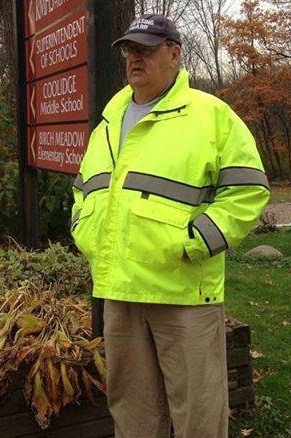
Bob was never confirmed in the Episcopal Church, though. I suspect so that he couldn’t be elected senior warden (he did serve as Junior Warden, which had fewer requirements). But Bob didn’t need the hands of a bishop to demonstrate the depth of his faith and dedication—not only to Emmanuel, but to the whole people of God—serving meals at the Reading Senior Center and Bread of Life dinners in Malden, and as a crossing guard, helping kids make their way to school. How special to start your school day with a greeting from Bob—a guy whose heart was so big.

On days when Emmanuel hosted the Bread of Life dinner, Bob used to take his truck to a bakery in Woburn to pick up mountains of baked goods—it had to be the truck, because a car would require two trips. That’s, of course, before he got down to the real work making shepherd’s pie for over 100 guests. If you figure that Bob cooked every other month, for thirty years, that’s 180 dinners. Then multiply by 100 people served, and you get to 18,000 meals. What a life of faithful discipleship.

Bob was the general of the Bread of Life kitchen. And his field marshal was most certainly Olga Packard, keeping things organized, assigning tasks and making sure the dinners moved along. In fact, even in the hospital, having just come out of brain surgery hours earlier, Olga was planning new recipes for Bread of Life dinners, while also thinking of the kids in parish, wanting to make this year’s gingerbread house party even more special.

One of the first things I learned about Olga was that she was the first woman to serve as Senior Warden, from 1979 to 1981. And so in the parish archives we have lots of old photographs and many of them include Olga, almost always she surrounded by men in suits—never with the ladies of the parish. Whether it’s pictures of building projects, fundraising committees, or the vestry, Olga is there as a lone, strong woman—one who paved the way for so many others, and always in her signature high heels. 

The night before Olga died I went to her house at about midnight. Tobey, Kimball, Neysa, and I gathered in her bedroom. Olga was unconscious, but surrounded by stories of her life, by Big Band music, and by lots of prayer. After a while, I said, “I think Olga would want us to have tea.” So, we went downstairs, pulled every kind of baked good from the fridge, and at 2:30 am, for about 45 minutes we enjoyed tea, celebrating Olga’s long and wonderful life, and entrusting her into God’s heart. But, you know, Olga always wanted to be in charge. So she waited until about 10:30 in the morning, after church had ended and the congregation she had loved had a chance to lift her up in prayer one last time, finally sending her into God’s arms.

In school, in church, in shops and at tea we meet the saints of God. Nowhere is that more true than right here at Emmanuel. Nowhere more so than in these saints we remember and celebrate this morning, whom we miss, but who are shining on us, as we, like them, strive to be saints of God ourselves—not only in ages past—but here and now, today and always. How fortunate we have been, how blessed to have known them, and to have been loved by them.

And, it is into this very same call to sainthood, into this same life infused in Christ, that we will baptize Wendy and Tristan in a few moments. They are joining their lives to Bill’s and Olga’s, to Bob’s and Barbara’s, to Brian’s, Joyce’s, Edie’s and Ginny’s. They are joining the whole Communion of Saints across time and space, those sitting next us this morning, those we hold in our hearts, and those whose stories we don’t know.

Because in baptism, we are all saints of God—sealed as Christ’s own forever. Not without our mistakes, failings, and limitations, for sure. But, always drawn together into a new, resurrection, Easter life. What’s more, as we have heard this morning in the stories of the saints we have known, there’s no one right way to live into this life. It can be through making dinners or teaching school, through business acumen put in service of others or as a school crossing guard. It can even, as the song says, be as a soldier, a doctor, or a shepherdess on the green. There is room, and a role, for each and everyone of us. What we do is not nearly so important as how we do it—filled with the grace, the love, and the song of God.

They lived not only in ages past, there are hundreds of thousands still. The world is bright with the joyous saints who love to do Jesus' will. You can meet them in school, or in lanes, or at sea, in church, or in trains, or in shops, or at tea; for the saints of God are just folk like me, and I mean to be one too.  

May we all be those saints, today and always, and for all eternity. 

To God be the glory: Father, Son, and Holy Spirit. Amen. 


© The Rev. Matthew P. Cadwell, PhD

Friday, May 8, 2015

Celebrating the Rev. David J Siegenthaler

On May 7, 2015 Episcopal Divinity School's Alumni/ae Association bestowed its highest honor--the Jean Steele Award--on the Rev. Dr. David J. Siegenthaler, Tutor Emeritus in History. I was privileged to write and deliver the citation. Friday, May 8, the School dedicated the Rev. Dr. David J. Siegenthaler '55 Library Atrium in his honor. Both events were moving and inspiring. Here is the citation for the Alumni/ae Award.


Episcopal Divinity School 

Jean Steele ’68 Award 

The Reverend David J. Siegenthaler, D.D. ’55, ’95 

In an essay on spirituality David Siegenthaler wrote: “The Book of Common Prayer is informative for Anglicans not only for definition of doctrine and polity but as well for the content and style of spirituality. That book is the matrix. The concerns and consequences of corporate worship are the concerns and consequences of personal worship. In its simplest terms this means that Anglican spirituality is personal but never private, never detached from an individual’s engagement with the community and with the world. Anglican spirituality seems always—as do the services of the Book of Common Prayer—to compel the individual back into the world….The individual is empowered to rejoin the ranks of the larger company, to go forth in concert with others, ‘to continue in that holy fellowship, and do all such good works as God has prepared for us to walk in.’”

This is precisely what theological education is meant to do as well. Students come for a time, enriched and shaped by teaching, worship, and community life and then, empowered by our formation and training, we are sent back into the wider church and world, among that holy fellowship, as we together in concert, laity and clergy alike, undertake the work that God has prepared for us to walk in. For generations of students, staff, faculty, and alumni/æ at Episcopal Theological School and Episcopal Divinity School, the Reverend David Siegenthaler has played a vital and integral role in this particular matrix of theological, spiritual, and liturgical formation, refreshment, and empowerment.

It might surprise some to know that David Siegenthaler, who seems so much the quintessential Anglican, started life as a Lutheran. His father was the pastor of churches in Buffalo and Baltimore. Nor did David initially pursue his own theological education here on Brattle Street. Rather, that was in New Haven at the Yale Divinity School. In God’s good time, however, David was lured into the Episcopal Church by the richness of Anglican spirituality and the Prayer Book tradition he describes so eloquently. He found his way here to Brattle Street and into our lives initially to pursue graduate studies before being ordained in June of 1955 by Bishop Norman Burdett Nash (ETS 1915).

David returned to ETS in 1969, a well-seasoned priest, to serve on the faculty as a tutor in church history and as librarian in the then-new Sherrill Library. He has been a constant and gracious presence ever since—46 years, so far. In the Library David has cared for the School’s archives and special collections with particular dedication and devotion. In the classroom and as a senior tutor David inspired generations of students to read the texts of history carefully and deeply. Katharine C. Black ’86 recalled especially a course titled “Hearth and Altar—Christian Nurture in England on the Eve of the Reformation.” It ended with students recreating an authentic 14th century feast, including some kind of whole beast roasted over an open fire in the back campus parking lot. Only a lover of history, like David, could inspire his students to bring the middle ages to life with such powerful, if smoky, effect. But, lest we imagine, falsely, that David actually lives in the middle ages, we shouldn’t forget that he also proudly served as a concelebrant for the consecration eucharist of Bishop Barbara Harris in 1989—remembering and cherishing our sacred past, while standing firmly in the present, much like EDS itself.

I arrived at EDS in 1995 after David had “officially” retired from teaching—so there was no “Hearth and Altar” or roasted beast for me. But, of course, a teacher like David never truly stops teaching—whether in the classroom, chapel, or refectory. A particular recollection of those years is David’s annual historical tour for new students, highlighting points of interest on the EDS campus—the Flemish inspired architecture, the chapel windows, and even the conspicuous presence of the Partridge Parchment in the stained glass window of the Tyler Room. Some of us who were no longer new students took the tour every year, just to absorb as much lore from David as we could.

The same was true when one year David co-taught Liturgical Practicum with Lloyd Patterson and John Hooker, regaling us with tales of his curacy in Boston and rectorship in Duxbury. A particular story that comes to mind is of a baptism early in his curacy at Emmanuel Church on Newbury Street. The baby was wearing a slippery gown and David said that it was touch and go for a while, worrying that the child might slip right out of his arms. My favorite moment, though, was David’s tutorial on liturgical haberdashery. After explaining that the tippet is worn over the hood, what exactly an amice is, and how to tie a cincture, David offered us his general philosophy of liturgical attire, which is fairly easy to remember: “the more fabric the better!” He probably should have received a commission from Almy’s and Wipple’s after his impressionable students, like me, rushed out to order the longest and flowiest surplices possible. I think of David every time I wear it.

Most of all David has been a friend and inspiration to generations of students and alumni/ae, to say nothing of faculty colleagues and staff. Whether in the refectory, out on the campus quadrangle, or in Harvard Square along Brattle Street, David has a unique ability to forge friendships, bringing to nearly every conversation his extraordinary grace and wit, to say nothing of his wry smile. What day isn’t made better by breakfast or lunch with David Siegenthaler, or even just a tip of his hat?

There is no way that we could even begin to count the number of lives David has touched and the ministries he has shaped in nearly fifty years of ministry on this campus. There is no way we could count the number of hearts that are warmed simply by the thought of this gentle, caring, and witty man, who has devoted his life to this school and to the training of clergy and laity for ministry in the church and the world.

No one epitomizes what EDS is and can be when it is at its best than the Reverend David Siegenthaler. Twenty years ago the faculty honored David upon his “official” retirement with an honorary Doctor of Divinity degree. Tomorrow, the School will honor him by dedicating the Library Atrium in his name. Tonight, it is the Alumni/æ Association’s turn.

Therefore, in recognition of his faithful, dedicated and inspiring ministry in and to this School, I am extraordinarily pleased to present the Reverend David J. Siegenthaler ’55, ’95 with the Alumni/ae Association’s Jean Steele Award, our highest honor and given now for only the fourth time, for exemplary service to Episcopal Divinity School and in thanksgiving for all the ways that he has inspired and empowered generations of students and alumni/æ to do all of the good works that God has prepared for us to walk in.


Matthew P. Cadwell ’99
Co-President, Alumni/ æ Executive Committee